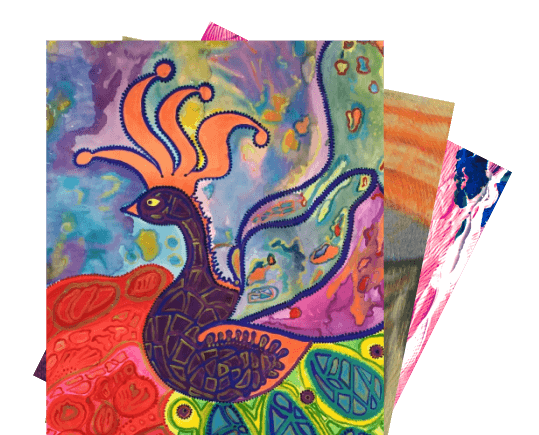
So far, we have walked through the foundation of Pichwai and the sacred rituals that shape its identity.We’ve seen how Shrinathji’s daily darshan inspires artists to capture mood, emotion, and devotion.Now, in Part 4, we journey into the grand celebrations of Nathdwara’s festivals.This part reveals how each season, each festival, and each joyous moment in Shrinathji’s year transforms into vibrant Pichwai narratives.
Festivals in Detail
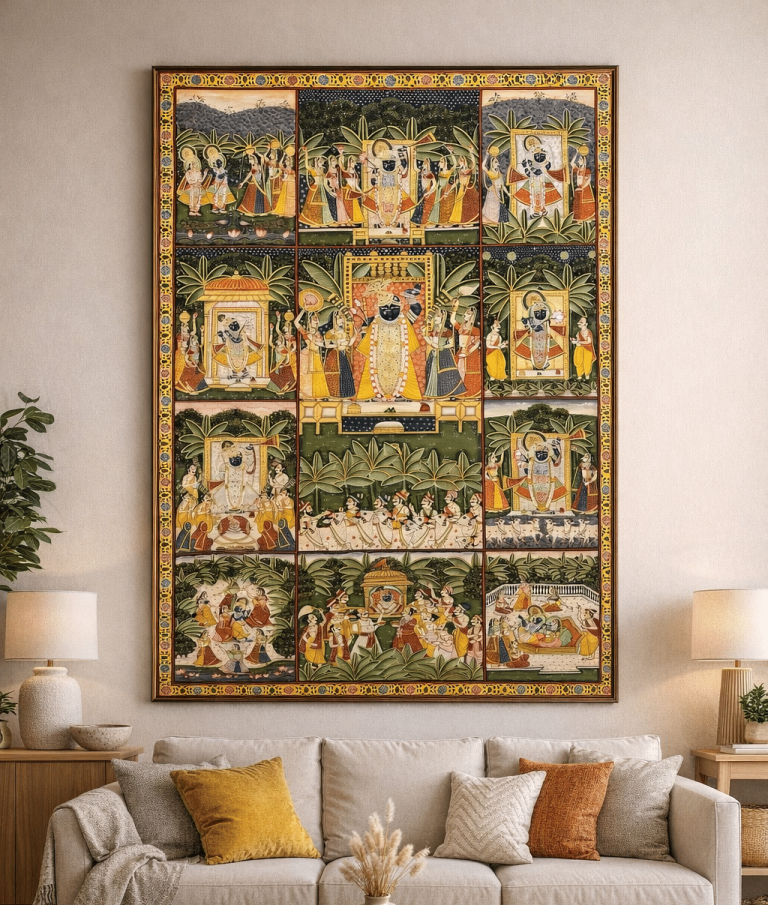
In Nathdwara, time is not counted in days or months. It is counted in utsavs, the festivals of Shrinathji.Each season arrives with a change in seva. Each festival brings new emotions, new adornments, and new colours. And Pichwai follows this rhythm faithfully, painting not just celebrations, but the living presence of Shrinathji as he is worshipped through the year.To understand Pichwai is to walk through a year in Shrinathji’s life, one festival at a time.
Sharad Purnima – Shrinathji Beneath the Full Moon
When the monsoon retreats and the moon rises full and luminous, Nathdwara prepares for Sharad Purnima.On this night, Shrinathji is worshipped in a mood of serenity and divine grace. Pichwai paintings of Sharad Purnima glow with soft moonlight, blooming lotuses, and still waters. Shrinathji is often shown amidst lotus ponds, surrounded by a quiet, radiant calm.The atmosphere is hushed, almost meditative. These paintings are meant to be experienced slowly much like the night itself where devotion feels deep, silent, and complete.
Janmashtami – The Appearance of Shrinathji
As Janmashtami approaches, Nathdwara fills with anticipation. This is not simply a celebration of birth it is the appearance of Shrinathji, welcomed with love, music, and devotion. In Pichwai, Janmashtami is depicted through tender imagery: Shrinathji as a divine child, gentle expressions, intimate settings, and a sense of protective warmth. Rather than grandeur, these paintings focus on closeness. They remind devotees that Shrinathji is not distant he is lovingly received, cared for, and celebrated as one of their own.
Annakut – The Mountain Offered to Shrinathji
Soon after comes Annakut, one of the most important festivals in Nathdwara. In Annakut Pichwai’s paintings, the canvas fills with abundance. Food offerings are arranged in layered formations, echoing Mount Govardhan itself. Shrinathji stands before this mountain of devotion calm, childlike, accepting not only the food, but the spirit of gratitude behind it.These artworks speak of humility and surrender. They remind us that prosperity finds meaning when it is offered back with faith and thankfulness.
Holi – Playful Seva of Shrinathji
Then comes Holi vibrant, joyful, and full of movement. In Nathdwara, Holi is celebrated as playful seva, and Pichwai paintings reflect this mood beautifully. Shrinathji appears amidst flowing colours, gentle laughter, and lively gestures. The compositions feel dynamic, alive, almost musical. These paintings celebrate joy as devotion. They tell us that Shrinathji delights in play, in colour, in shared happiness that bhakti can be light-hearted and full of warmth.
Diwali – Light Offered to Shrinathji
As winter approaches, Diwali brings illumination to Nathdwara.In Pichwai, Diwali scenes glow with rows of lamps, golden tones, and a sense of quiet elegance. Shrinathji is shown richly adorned, surrounded by light that feels festive yet serene. These paintings are reminders of renewal of light offered in gratitude, of devotion renewed through simplicity and faith.
Shrinathji’s Festival Calendar on Canvas
What makes Pichwai unique is that these festivals are not symbolic alone. They are still celebrated in Nathdwara, just as they have been for centuries, with specific attire, colours, flowers, and emotions chosen for Shrinathji each day. Pichwai artists observe these rituals closely, translating them onto cloth with patience and reverence. In doing so, Pichwai becomes a living calendar, a visual record of Shrinathji’s seva through the seasons. Each painting holds a moment of darshan. Each festival becomes timeless and Shrinathji continues to live not only in the temple, but wherever these paintings are lovingly seen. Today, curated platforms like Elisium Art help carry this living festival calendar beyond Nathdwara, presenting authentic Pichwai works to a global audience while honoring their ritual origins. In such spaces, the seasonal rhythms of Shrinathji are preserved with reverence, allowing devotion, colour, and tradition to remain intact even within contemporary settings.





 lOG IN





 Published on December 19, 2025