

 lOG IN





Pichwai in Modern Times
Written by Manasvi Vislot
Views 238
 Published on December 20, 2025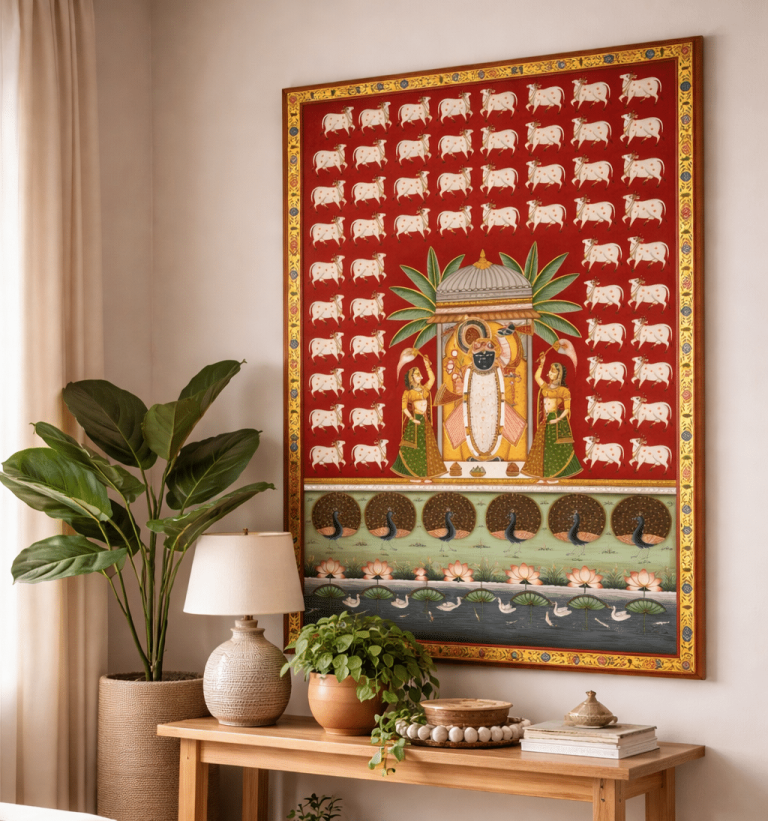
Across the previous parts, we traced Pichwai’s journey from temple rituals to festival celebrations, traditional techniques, and symbolic depth. We’ve seen how tightly it is woven with Shrinathji’s legacy. Now, in Part 7, we step into the present. This section explores how Pichwai lives today how artists reinterpret it, how collectors cherish it, and how the world continues to rediscover Shrinathji through this timeless art.
Pichwai in Modern Times
The temple bells still ring in Nathdwara every morning. The rituals remain unchanged. The stories are the same. Yet somewhere beyond the temple walls, Pichwai has quietly begun a new journey. Once created only for temple sanctums and royal patrons, Pichwai today finds its place in modern homes, global galleries, and thoughtful collections across the world. Not because it has changed but because the world has slowed down enough to listen.
From Sacred Spaces to Living Spaces
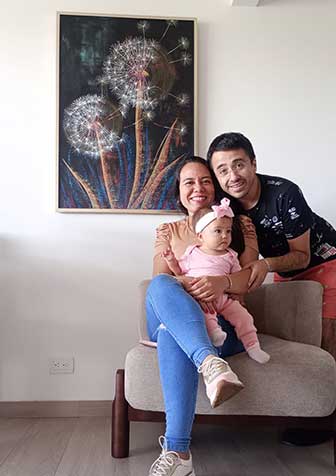
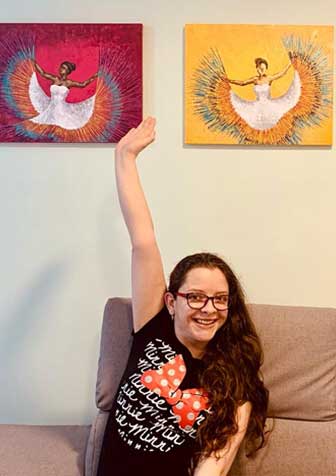
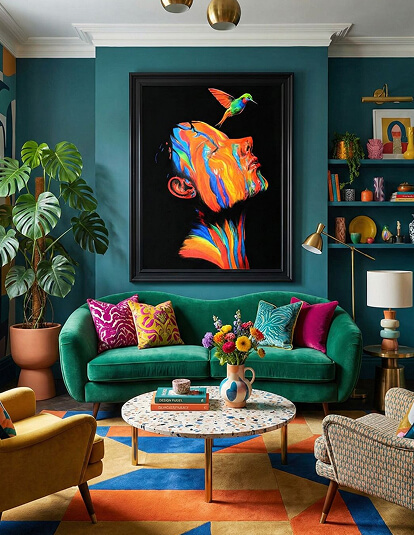
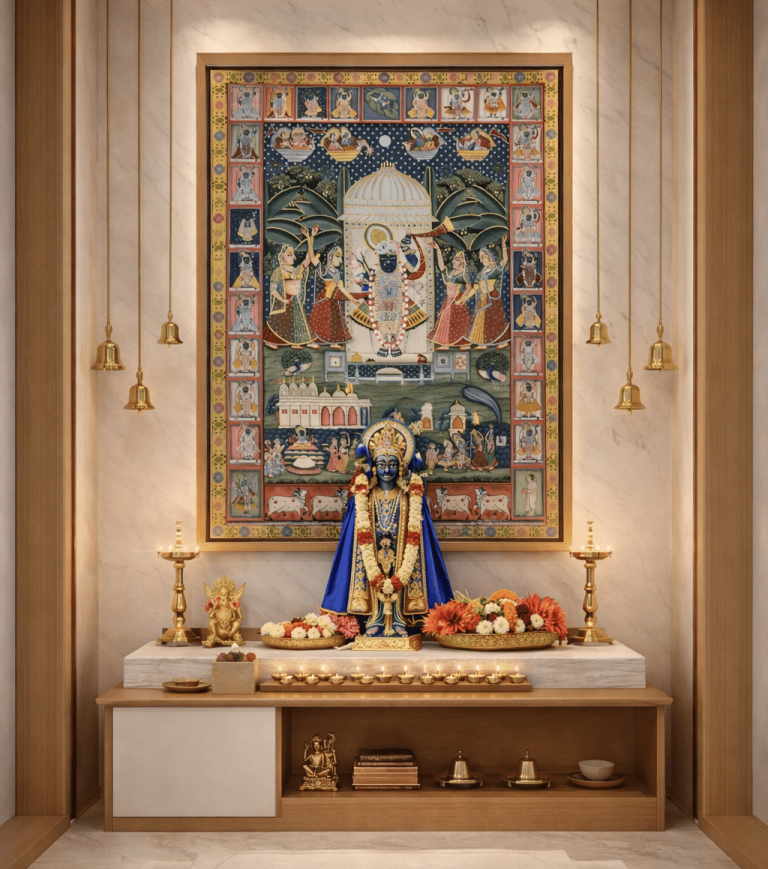
In modern homes, Pichwai no longer hangs only in prayer rooms. It appears above dining tables, in living rooms, and along quiet hallways, not as decoration, but as a presence. The soft colors, balanced compositions, and spiritual calm bring a sense of grounding to contemporary interiors. For many, especially younger collectors and global audiences, Pichwai becomes a way to stay connected to heritage, faith, and something more profound than trend-driven design.
The Global Journey of a Local Tradition
Today, Pichwai travels far beyond Nathdwara. Collectors in New York, London, Dubai, and Singapore seek these works for their authenticity and story. Interior designers pair Pichwai with minimal, modern spaces, allowing its detail and emotion to stand out. What once belonged to temple walls now speaks to a global audience not through translation, but through feeling.
Artists Between Tradition and Today
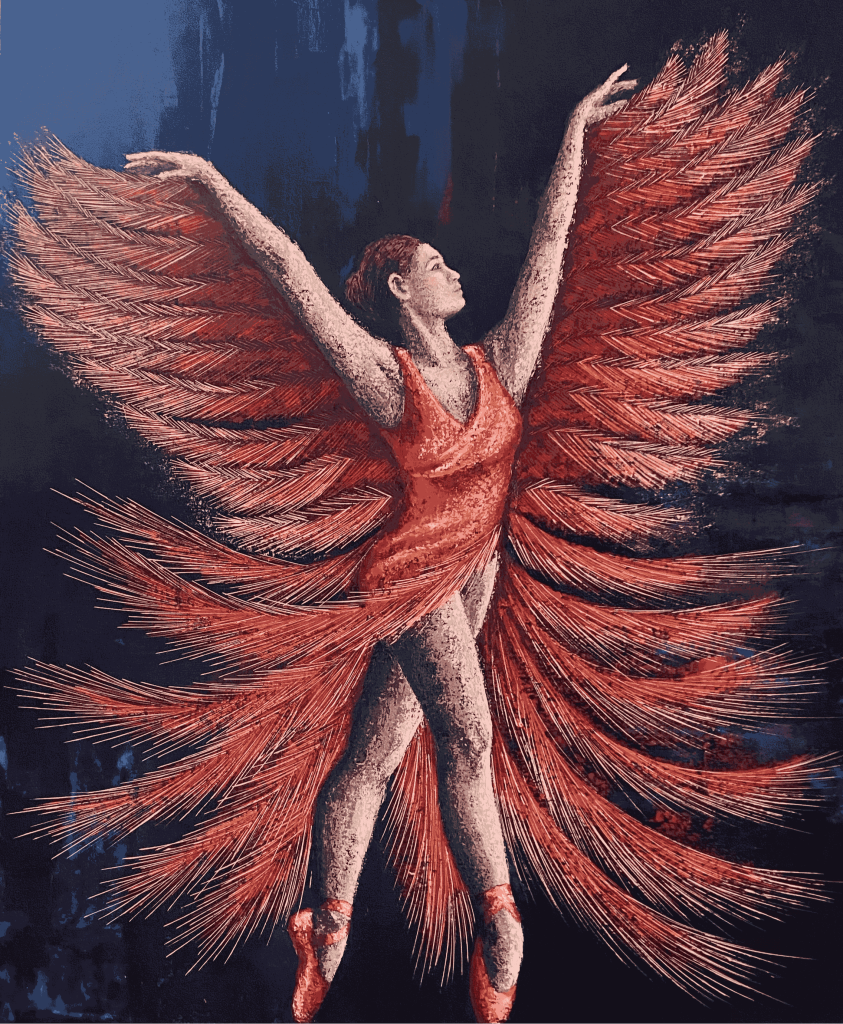
Modern Pichwai artists walk a delicate path. They respect centuries-old techniques while gently adapting compositions, scale, and color palettes for contemporary spaces. Some introduce subtle modern elements — softer tones, open compositions while keeping the core symbolism untouched. The challenge is not innovation, but balance. And when done right, Pichwai feels timeless rather than old.
Pichwai as a Collector’s Art
In recent years, Pichwai has also found recognition as a collectible art form. Collectors value its slow creation, natural materials, and cultural depth. Unlike mass-produced art, each Pichwai carries time, labor, and devotion qualities increasingly rare today. Owning a Pichwai is not about trend. It is about intention.
A New Kind of Devotion
Not every modern Pichwai owner is a traditional devotee. Some are drawn by its symbolism. Some by its stillness. Some by the stories quietly woven into each scene. Yet, over time, many find themselves forming a personal connection lighting a lamp before it, pausing before it, returning to it in moments of reflection. Pichwai has a way of meeting people where they are.
Preserving the Soul in a Fast World
In an age of speed and replication, Pichwai remains slow. It resists shortcuts. It refuses automation. Each painting still demands time, patience, and belief. And perhaps that is why it feels so necessary today. Pichwai reminds us to pause. To look. To feel.
A Living Tradition
Pichwai in modern times is not a revival it is a continuation. As long as artists paint with devotion, as long as stories are remembered, and as long as viewers choose to truly see, Pichwai will endure. Not as a relic of the past, but as a living tradition quietly carrying faith, beauty, and meaning into the present. Through stories, rituals, festivals, techniques, symbols, and its life in the modern world, Pichwai reveals itself as more than an art form. It is a living tradition shaped by devotion, guided by patience, and carried forward through generations of faith and craftsmanship. From the quiet sanctums of Nathdwara to homes across the world, its essence remains unchanged: a gentle reminder to pause, to look closer, and to feel the presence of Krishna in every detail. The legacy of Pichwai does not end here it continues wherever its stories are remembered, its rituals are honoured, and its beauty is truly seen.
In this journey from temple sanctum to contemporary space, curated platforms like Elisium Art serve as thoughtful custodians of the tradition, presenting authentic Pichwai works to collectors who value devotion, craftsmanship, and cultural depth. Here, the art is not detached from its roots it is preserved with reverence, allowing its sacred presence to live meaningfully within modern interiors.
Written by
Manasvi Vislot
Manasvi Vislot is an India based creative storyteller at Elisium Art. She blends global art trends with strategic digital insights, crafting content that connects readers with the evolving world of contemporary, digital, and cultural art. With her refined eye for aesthetics and a passion for making art accessible, Manasvi creates narratives that highlight the artists, ideas, and innovations shaping today’s creative landscape.