


 lOG IN





What Is Pop Art? A Beginner’s Guide to the Movement

Written by Manasvi Vislot
Views 196
 Published on 8 de enero de 2026
Pop Art is one of the most influential and recognizable art movements of the 20th century. Emerging in the late 1950s in Britain and the United States, Pop Art challenged the traditional boundaries between “high art” and everyday culture by transforming images from advertising, comic books, celebrities, and consumer products into powerful artworks.
Instead of focusing on classical subjects like landscapes or mythology, Pop artists embraced the imagery of modern life supermarkets, movie stars, billboards, and magazines. By elevating these ordinary visuals into fine art, they created a new artistic language that reflected the rapid growth of consumer culture after World War II.
Today, Pop Art is considered a defining cultural movement of the modern era. Its visual style bright colors, graphic compositions, and repeated imagery—has influenced advertising, graphic design, fashion, digital art, and contemporary painting. According to art market research, works by Pop artists such as Andy Warhol and Roy Lichtenstein have generated billions of dollars in global auction sales, demonstrating the movement’s lasting influence on the art world.
The Origins and History of Pop Art
Pop Art began as a reaction against the dominant art movement of the 1940s and 1950s known as Abstract Expressionism, which emphasized personal emotion and abstract forms. Younger artists wanted to create art that reflected the reality of modern urban life rather than purely internal expression.
The term “Pop Art” was first used in the mid-1950s in Britain, particularly by artists and critics associated with the Independent Group in London. They were fascinated by American advertising, Hollywood films, comic books, and mass media imagery.
By the early 1960s, the movement exploded in New York, where artists began transforming everyday objects into large-scale paintings and sculptures. Iconic examples include:
- Campbell’s Soup Cans by Andy Warhol
- Marilyn Diptych by Andy Warhol
- Whaam! by Roy Lichtenstein
- Just what is it that makes today’s homes so different, so appealing? by Richard Hamilton
These works transformed mass-produced imagery into gallery-worthy art and redefined what could be considered a masterpiece.
Key Characteristics of Pop Art
Pop Art is instantly recognizable because of its bold visual language and connection to popular culture.
1. Everyday Imagery
Pop artists used familiar images from advertising, comics, newspapers, and consumer goods. Soup cans, soda bottles, comic characters, and celebrity portraits became major artistic subjects.
2. Bright, Bold Colors
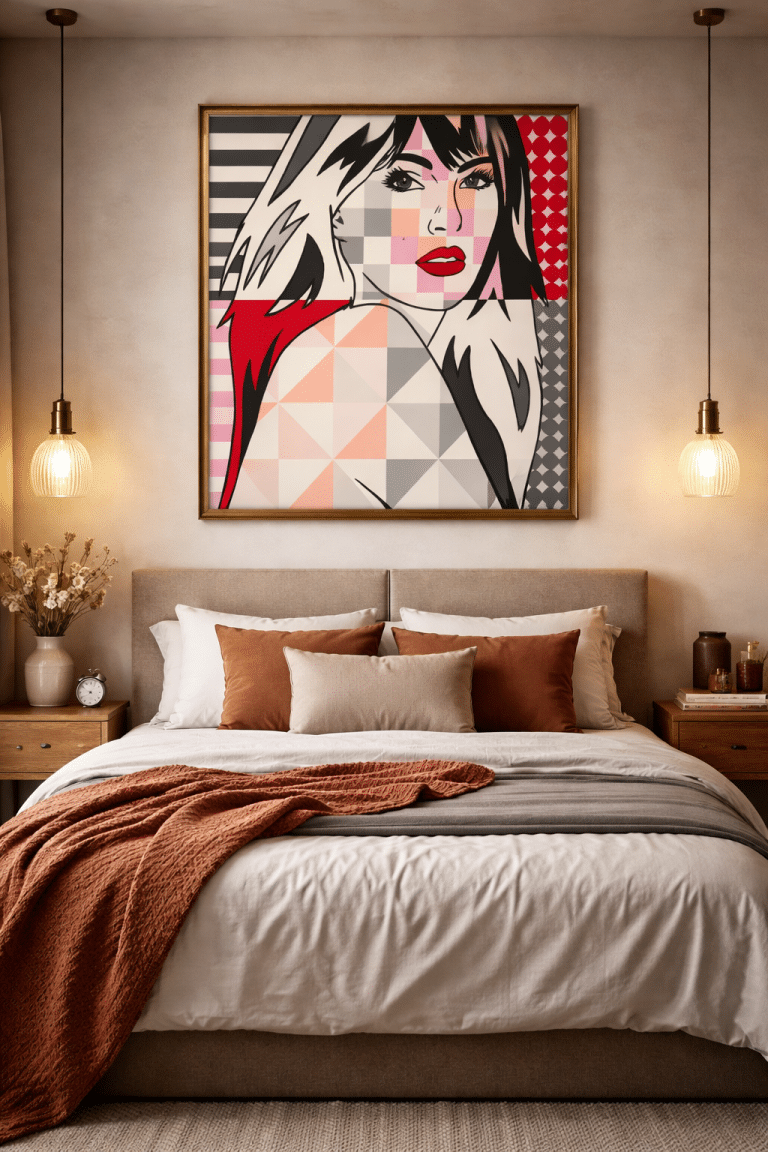
Pop Art paintings typically feature vivid primary colors such as red, yellow, and blue, often arranged in flat color blocks that resemble printing or advertising graphics.
3. Repetition and Serial Imagery
Many Pop artworks repeat the same image multiple times, mimicking the visual repetition of consumer products and advertising.
4. Graphic Lines and Comic Influence
Bold outlines and graphic shapes inspired by comic books were widely used, particularly by artists like Roy Lichtenstein, who recreated the look of printed comic panels.
5. Irony and Social Commentary
Despite its playful appearance, Pop Art often contains subtle criticism of consumerism, fame, and media culture.
Techniques Used in Pop Art
Pop Art artists used innovative methods that blurred the boundary between fine art and commercial design.
Silkscreen Printing
This industrial printing technique allowed artists like Andy Warhol to create multiple versions of the same image, emphasizing the idea of mass production.
Ben-Day Dots
Used famously by Roy Lichtenstein, these tiny dots mimic the printing technique used in comic books and newspapers.
Collage and Appropriation
Artists combined photographs, advertisements, and found images to create layered compositions reflecting modern media culture.
Flat Color and Minimal Shading
Unlike traditional painting, Pop Art often uses flat color areas with little shading, reinforcing its graphic and commercial aesthetic.
Famous Pop Art Artists
Several artists became global icons through their contributions to the Pop Art movement.
Andy Warhol
Often called the “Prince of Pop Art,” Warhol transformed everyday objects and celebrities into cultural icons through screen printing and repetition.
Roy Lichtenstein
Known for comic-inspired paintings using Ben-Day dots and dramatic speech bubbles.
Richard Hamilton
A British pioneer whose collage works helped define the early philosophy of Pop Art.
Claes Oldenburg
Famous for giant sculptures of everyday objects such as hamburgers, clothespins, and lipsticks.
James Rosenquist
Known for large-scale paintings combining advertising imagery with political themes.
Iconic Pop Artworks That Defined the Movement
Some of the most recognizable artworks in modern art history belong to the Pop Art movement:
- Campbell’s Soup Cans – A series of 32 paintingsdepicting supermarket soup labels.
- Marilyn Diptych – A portrait series repeating the image of Marilyn Monroe.
- Whaam! – A dramatic comic-style painting of a fighter jet explosion.
- Look Mickey – One of the earliest comic-inspired Pop paintings.
These works demonstrate how Pop Art elevated everyday imagery into cultural symbols that remain recognizable worldwide.
The Lasting Legacy of Pop Art
More than sixty years after its emergence, Pop Art continues to influence contemporary artists, digital creators, street artists, and designers. Modern artists often combine Pop Art aesthetics with new media, creating hybrid styles that blend painting, digital graphics, and pop culture imagery.
At galleries and collections worldwide, Pop Art remains one of the most accessible and recognizable forms of contemporary art bridging the gap between popular culture and fine art.
Escrito por
Manasvi Vislot
Manasvi Vislot is an India based creative storyteller at Elisium Art. She blends global art trends with strategic digital insights, crafting content that connects readers with the evolving world of contemporary, digital, and cultural art. With her refined eye for aesthetics and a passion for making art accessible, Manasvi creates narratives that highlight the artists, ideas, and innovations shaping today’s creative landscape.
Las obras más vistas entre nuestros lectores

The Story of an Owl
36 W x 36 H Inch
Pleasure Goddess
36 W x 48 H Inch

Ganesha
20 W x 24 H Inch

The More I Blossom (Print)
16 W x 20 H Inch

The Story of Peacock
72 W x 36 H Inch

The Story of a City
48 W x 36 H Inch