


 lOG IN





Pichwai Artistic Techniques
Written by Manasvi Vislot
Views 198
 Published on 19 de diciembre de 2025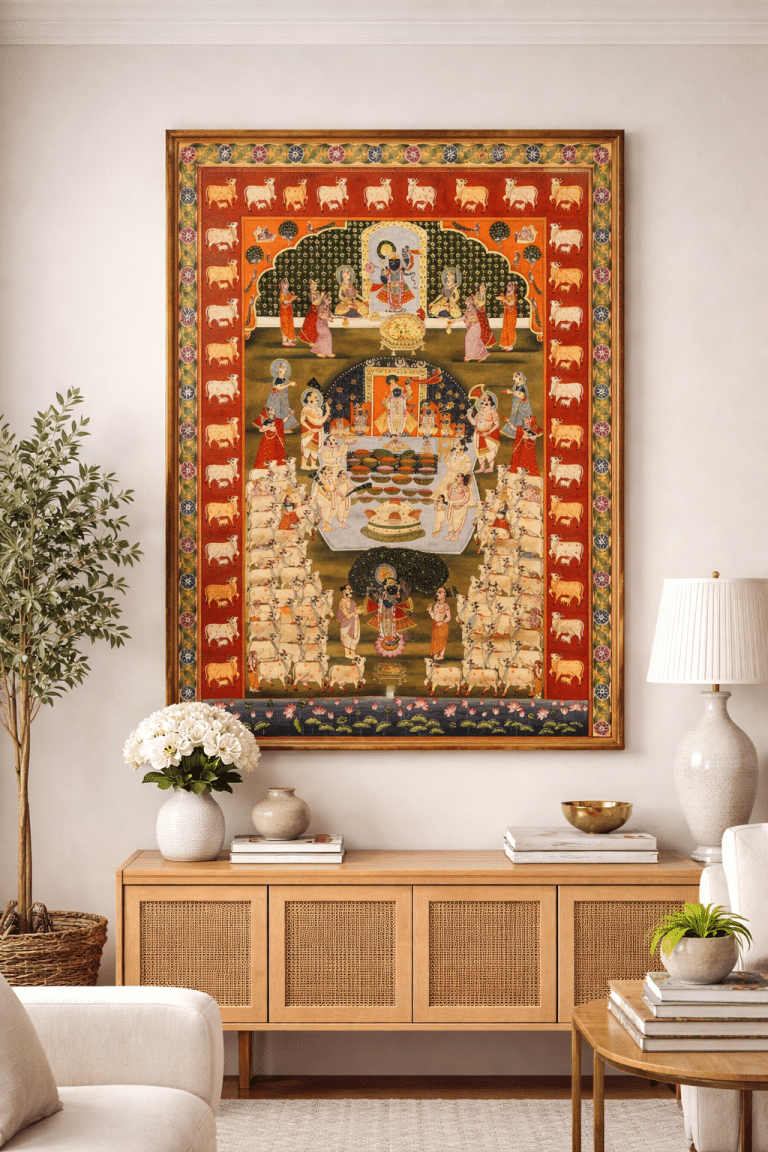
Pichwai Artistic Techniques
Before the first brush ever touches the cloth, a Pichwai painting has already begun.It begins in silence. In preparation. In patience. Unlike many art forms, Pichwai is not rushed. It follows a rhythm passed down through generations in Nathdwara, where every step is treated as an act of devotion. The technique here is not merely skill; it is seva.
Preparing the Canvas – Where the Story Begins
A traditional Pichwai does not start on paper. It begins on handwoven cotton cloth. The cloth is carefully stretched, hand-tightened, and coated with a natural base made from chalk and adhesive. This creates a soft, absorbent surface that can hold color for centuries. Only once the surface is perfectly smooth does the artist begin to draw. This quiet preparation often takes days. Nothing is hurried. In Pichwai, patience is the first technique learned.
Drawing the Divine – Sketching Shrinathji
The initial sketch is done freehand, guided by memory and tradition rather than reference images. The proportions of Shrinathji, the curve of his posture, the tilt of his head each follows sacred visual rules refined over centuries. The eyes are drawn last. Artists believe that once the eyes are painted, the painting comes alive. Until then, the work remains in a state of becoming.
Natural Pigments Colors from the Earth
The colors in Pichwai do not come from tubes. They come from stones, minerals, flowers, and shells. Blues from indigo, reds from minerals, greens from plant sources. Each pigment is ground by hand, mixed slowly, and tested repeatedly. These natural colors age gracefully, growing richer over time. They do not fade easily, carrying with them the quiet strength of the earth itself.
Layer by Layer: The Language of Patience
Pichwai paintings are built slowly, one layer at a time. Backgrounds are filled first. Then come figures, garments, lotuses, cows, and ornaments. Each layer must dry completely before the next begins. A single mistake can mean starting over. This layering is what gives Pichwai its depth its softness, its glow. It is also what makes each painting unique. No two works can ever be exactly the same.
Gold Work – Light Within the Painting
One of the most striking elements of Pichwai is its use of gold. Real gold leaf or gold powder is applied to jewelry, crowns, lotuses, and temple elements. Under soft light, these details shimmer gently never loudly. Gold in Pichwai is not decoration alone. It symbolizes divine light, purity, and sacred presence. Its application requires a steady hand and complete focus.
Minute Detailing – Where Devotion Lives
Look closely at a Pichwai painting, and you will find worlds within worlds. Tiny lotus veins. Individual cow expressions. Delicate folds of fabric. Each detail is painted with a brush so fine it sometimes carries only a single hair. These details are not meant to be noticed at first glance. They reveal themselves slowly, rewarding those who pause and look closer.
Time as a Technique
A traditional Pichwai painting can take weeks or even months to complete. This is not inefficiency it is intention. Time allows the painting to breathe, to grow, to settle into its form. It allows the artist to step back, return, and refine. In a world of speed, Pichwai chooses slowness.
When Technique Becomes Devotion
What makes Pichwai techniques truly special is not their complexity, but their purpose. Every step from stretching the cloth to placing the final highlight is an offering. The artist does not seek perfection for display, but sincerity for devotion. That is why Pichwai paintings feel alive. They are not just created; they are cared for
The Hand That Paints, The Heart That Believes
In Pichwai, technique and belief walk together. The hand follows tradition. The heart follows Krishna. And somewhere between pigment and prayer, a painting is born carrying not just skill, but centuries of faith, waiting quietly to be discovered by those who choose to look a little longer. These techniques are more than methods passed down through generations they are acts of devotion, patience, and reverence. Each brushstroke carries intention, each layer holds time, and every completed Pichwai becomes a quiet offering to Krishna. Yet, technique is only one layer of this sacred art. Beyond it lies a deeper language the symbols, meanings, and signs woven into every motif, and the way Pichwai continues to evolve in the modern world. Today, thoughtful curatorial platforms like Elisium Art help ensure that these time-honoured techniques are not lost to speed or imitation. By presenting authentic, carefully crafted Pichwai works to discerning collectors worldwide, such platforms preserve the integrity of the art while allowing its devotion, precision, and heritage to live meaningfully within contemporary spaces.
We invite you to continue the journey and explore the next parts of The Legacy of Pichwai, where each chapter reveals another dimension of this timeless tradition
· Part 6: Symbolism in Pichwai Art
· Part 7: Pichwai in Modern Times
Escrito por
Manasvi Vislot
Manasvi Vislot is an India based creative storyteller at Elisium Art. She blends global art trends with strategic digital insights, crafting content that connects readers with the evolving world of contemporary, digital, and cultural art. With her refined eye for aesthetics and a passion for making art accessible, Manasvi creates narratives that highlight the artists, ideas, and innovations shaping today’s creative landscape.
Las obras más vistas entre nuestros lectores

The Story of an Owl
36 W x 36 H Inch
Pleasure Goddess
36 W x 48 H Inch

Ganesha
20 W x 24 H Inch

The More I Blossom (Print)
16 W x 20 H Inch

The Story of Peacock
72 W x 36 H Inch

The Story of a City
48 W x 36 H Inch