


 lOG IN





Real Hearts, Real Feelings: The Rise of Anatomical Heart Art This Valentine’s Day

Written by Manasvi Vislot
Views 110
 Published on 20 de enero de 2026
For decades, Valentine’s Day imagery has relied on a single visual shorthand: the perfect heart. Smooth, symmetrical, and endlessly reproduced, it has come to represent a version of love that feels increasingly distant from lived experience. In a world where emotional honesty is valued more than surface-level romance, artists and collectors alike are turning toward something more real. This Valentine’s Day, real heart drawing and human heart artwork are rising not as provocations, but as truthful expressions of love, complex, vulnerable, and alive.
This shift is occurring alongside record-breaking participation on Valentine’s Day. According to the National Retail Federation, Valentine’s Day spending crossed $27 billion globally, with gifting no longer limited to couples but extending to self-expression and meaningful, lasting purchases. As consumers shift away from disposable gifts, art for Valentine’s Day is increasingly viewed as a way to express emotion with permanence rather than novelty. As legendary art curator Hans Ulrich Obrist has noted, “Art is a way of thinking and feeling at the same time.” This duality is precisely what anatomical heart imagery offers: precision paired with emotion, structure paired with meaning.
The Real Heart as an Artistic Subject
The heart has long existed in art history, first appearing in early medical and scientific drawings where accuracy was paramount. These illustrations, though clinical in origin, carried an unexpected intimacy: veins, chambers, and valves mapped the engine of human life itself. Contemporary artists have reclaimed this imagery, transforming anatomy into metaphor. When anatomy enters fine art, it stops being purely educational and becomes expressive. A real heart drawing no longer asks to be admired for beauty alone, but to be felt for what it represents: endurance, rupture, healing, and growth.
Real Heart Drawing as Emotional Language
Unlike stylized hearts, expressive heart paintings invite viewers into complexity. The visible veins suggest connection and dependency; chambers imply depth; imperfections speak to emotional scars. These artworks resonate because they mirror how love is experienced uneven, demanding, and deeply human. Viewers connect emotionally to realism because it validates their own experiences. Love is not flat or decorative. It beats, struggles, and survives. This is why human heart artwork has become such a powerful motif in contemporary Valentine’s Day art; it tells the truth.
Art historian and curator Lucy Lippard, known for her writing on emotional realism in contemporary art, once observed that “The strongest art is often that which admits vulnerability.” Anatomical heart art does exactly that, placing vulnerability at the center of visual language.
Anatomical Heart Art in Modern Interiors
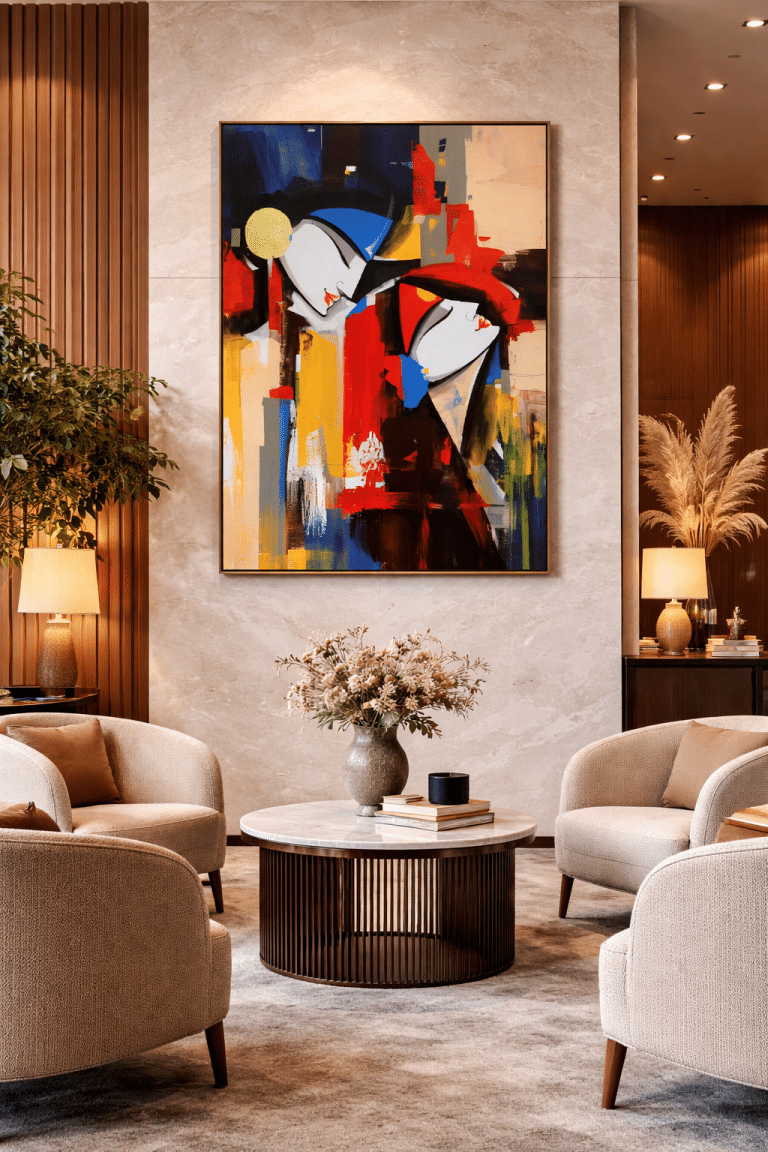
Today’s collectors are not simply buying art to fill walls; they are curating emotional environments. Valentine’s wall art featuring real hearts is increasingly chosen for intimate spaces, bedrooms, studios, and reading corners where personal reflection matters more than public display. Bold heart artworks function as quiet anchors within a room. They don’t overwhelm; they stay. Unlike seasonal décor, these pieces grow with the viewer, revealing new meanings over time. This longevity is a key reason collectors gravitate toward heart-painting art that resists cliché. Art Curator Nicholas Serota says that “Art is not about conveying a single message. It is about creating a space where meaning can emerge.”
Valentine’s Day Art That Tells the Truth
As Valentine’s Day evolves, so does the idea of romantic gifting. Mature love is no longer about exaggeration; it’s about recognition. Choosing Valentine’s Day art that reflects complexity is a way of acknowledging a real connection rather than performing romance. Art becomes an act of honesty. It says: this love has depth, history, and presence. It is lived, not staged.
This philosophy sits at the heart of The HeArt Movement. Through #TheHeArtMovement, Elisium Art invites a return to the heart as something felt rather than idealized. The campaign celebrates artworks that engage with vulnerability, resilience, and emotional truth moving beyond decorative symbolism toward meaningful expression. By reclaiming the heart as both a physical and emotional form, The HeArt Movement reframes Valentine’s Day art as a lasting language of care, connection, and self-awareness one that continues long after February has passed.
Elisium Art and the New Valentine Aesthetic
At Elisium Art, this shift toward emotional realism is intentional. The platform supports artists who explore vulnerability through form, texture, and symbolism particularly within contemporary heart imagery. A defining example is Sylvia Barrero, whose work blends emotional intuition with visual richness. Her artist profile reveals a practice rooted in growth, transformation, and lived feeling. Her Valentine-featured artwork, The More I Blossom, offers a poetic counterpoint to anatomical realism where the heart becomes a site of expansion rather than perfection.
Alongside Sylvia’s work, Elisium Art’s broader love-themed collection showcases diverse interpretations of modern love from abstract emotional landscapes to symbolic explorations of intimacy, allowing collectors to find pieces that resonate with their own emotional truths.
Escrito por
Manasvi Vislot
Manasvi Vislot is an India based creative storyteller at Elisium Art. She blends global art trends with strategic digital insights, crafting content that connects readers with the evolving world of contemporary, digital, and cultural art. With her refined eye for aesthetics and a passion for making art accessible, Manasvi creates narratives that highlight the artists, ideas, and innovations shaping today’s creative landscape.
Las obras más vistas entre nuestros lectores

The Story of an Owl
36 W x 36 H Inch
Pleasure Goddess
36 W x 48 H Inch

Ganesha
20 W x 24 H Inch

The More I Blossom (Print)
16 W x 20 H Inch

The Story of Peacock
72 W x 36 H Inch

The Story of a City
48 W x 36 H Inch