

 lOG IN





Curator Spotlight: Tom Finkelpearl on Openness, Civic Imagination & the Future of Art in a Fragmented World
Written by Kritika Saikia
Views 249
 Published on 21 de noviembre de 2025
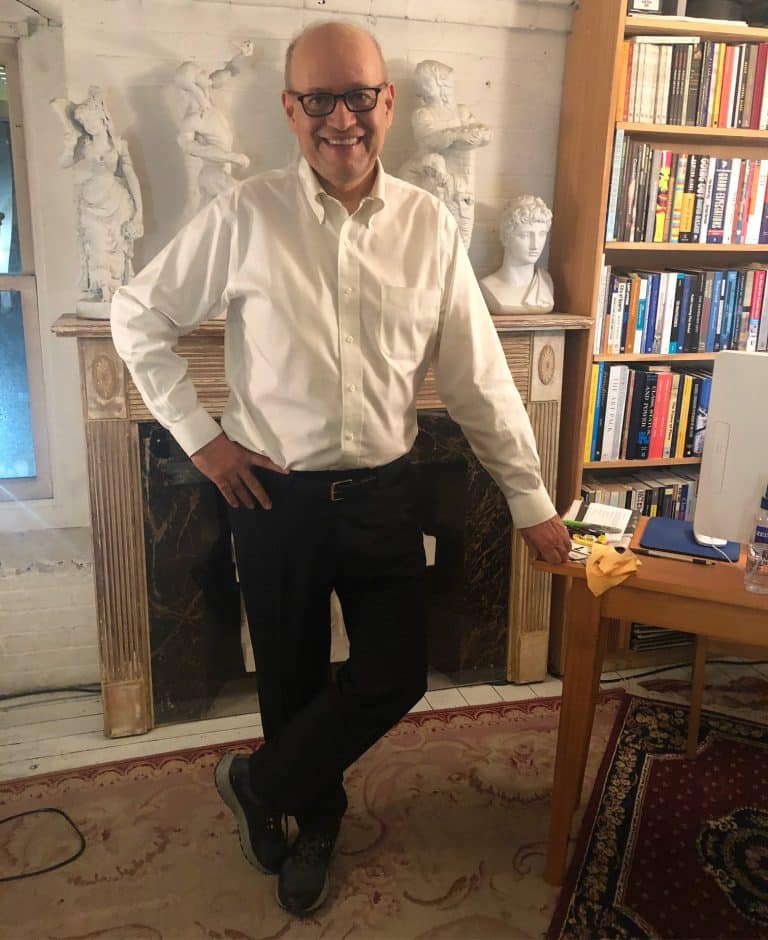
Feeling great, grateful, and focused.
Elisium Art’s Curator Spotlight series opens its first virtual conversation with a figure whose influence stretches far beyond museums. Tom Finkelpearl — Guest Curator at the Whitney Museum of American Art, former Executive Director of the Queens Museum, and former Commissioner of the NYC Department of Cultural Affairs — has spent four decades shaping how art intersects with public policy and civic life.
In this wide-ranging dialogue, Finkelpearl speaks with the openness, humour, and clarity that define his public voice. What begins as a discussion of museum ethics expands into reflections on democracy, community, technology, equity, and the emotional core of artistic creation.
This feature blends narrative insight with edited Q&A highlights — part profile, part interview, part cultural essay — holding space for Tom’s ideas while situating them within today’s global art conversations.
Setting the Stage: Why Tom Finkelpearl’s Vision Matters Now
Across cultural ecosystems worldwide — from Mexico City to Lagos to Delhi — institutions are confronting questions Tom has engaged with for decades:
- How do museums stay relevant as public trust declines?
- How should digital art coexist with centuries of physical practice?
- How can platforms ethically support regional and Indigenous artists?
- How do we democratise access without lowering artistic integrity?
- What does creativity mean in an era of AI-generated imagery?
His insights resonate far beyond New York — offering guidance to global platforms like Elisium Art, which operate across borders and champion artists navigating multiple worlds at once.
The Man Who Believes Museums Should Open Their Doors — Literally and Metaphorically
When Tom reflects on his twelve years at the Queens Museum, he frames its transformation as both an architectural and moral challenge: how does an institution truly open itself? In Queens — one of the most linguistically diverse regions in the United States, where “hundreds of languages are spoken” — a museum can’t remain a distant observer. It must become a participant in community life.
Although the museum was a «perfectly well-funded institution,» it «wasn’t connecting deeply enough with the local audiences.» The building, programming, and staff were strong but not entirely in dialogue with the surrounding neighbourhoods. The breakthrough came through people rooted in Queens itself. As Tom described, “There were a series of people who are from Queens who we hired, who really kind of broke open the doors, let’s say, and opened the doors for people in the community.” One of those was Jayshree Abhichandani, who “grew up in Mumbai and then moved to Queens when she was fifteen.” Her cultural fluency helped shift the museum from being in Queens to being of Queens.
This shift culminated in redefining the museum’s mission around a single word: openness. As Tom emphasised, openness had to guide architecture, community work, hiring, and institutional values — not as an addition, but as the foundation. Elisium Art shares this conviction, championing regional, Indigenous, and global artists by honouring the contexts and stories that shape their practice.
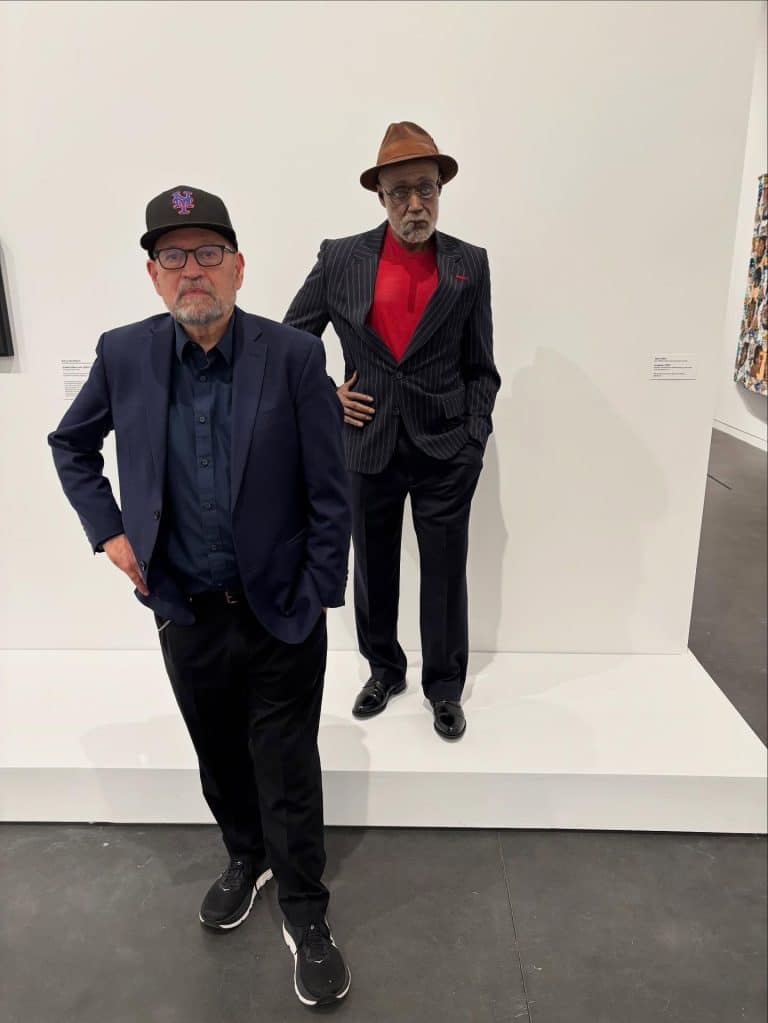
A terrific show at the Studio Museum in Harlem.
Why Museums Struggle — and How They Can Change
Tom offered a direct critique of the U.S. museum system: “I think museums in general, and particularly in the United States, have a problem, which is that they’re very elitist institutions.” He contextualised this by outlining three global funding models:
The French model, where “the person selling you the ticket or the curator actually works for the government,” offers stability but risks censorship.
The British arm’s-length model provides public funding with institutional independence.
The American private model is shaped by wealth and philanthropy. As Tom put it, “America has this private system, which is essentially funded by the oligarchs of our country.”
Each has limitations, but Tom argued that museums function best when public, private, and community support intersect. His forthcoming book with Pablo Helguera asks a central question: How do institutions stay open when their funding structures pull them in different directions?
Gatekeeping, Craft, and Global Artistic Hierarchies
A key moment in the conversation came when Tom discussed artistic hierarchies. “Even just the designation of what’s craft and what’s art — that’s a kind of gatekeeping.” This divide has long marginalised creators across Latin America, Africa, India, Central Asia, and Indigenous communities — regions Elisium Art actively supports. Tom described seeing school-trained artists and craftspeople collaborate at the Bukhara Biennial in Uzbekistan, where the blend enriched the work. As he said, “There are incredibly talented artists all over the world.” The issue is not talent — it’s access.
Technology, AI, and the Limits of Digital Creation
Tom’s perspective on AI was cautious yet clear. “As a tool, I’m not against it. As an originator, I’m terrified.” His concern lies in authorship and learning. As a professor, he watched students submit assignments they didn’t write: «People are beginning to hand in papers that they did not write.»
On AI-generated art, he stressed that authorship depends on “who gave the instructions” and “how detailed the instructions were.” He warned AI could eventually imitate avant-garde behaviour: “If it understands that that’s what it’s supposed to be doing, it might be able eventually to do that as well.” But one truth stands: “People want to experience something a human being created.”
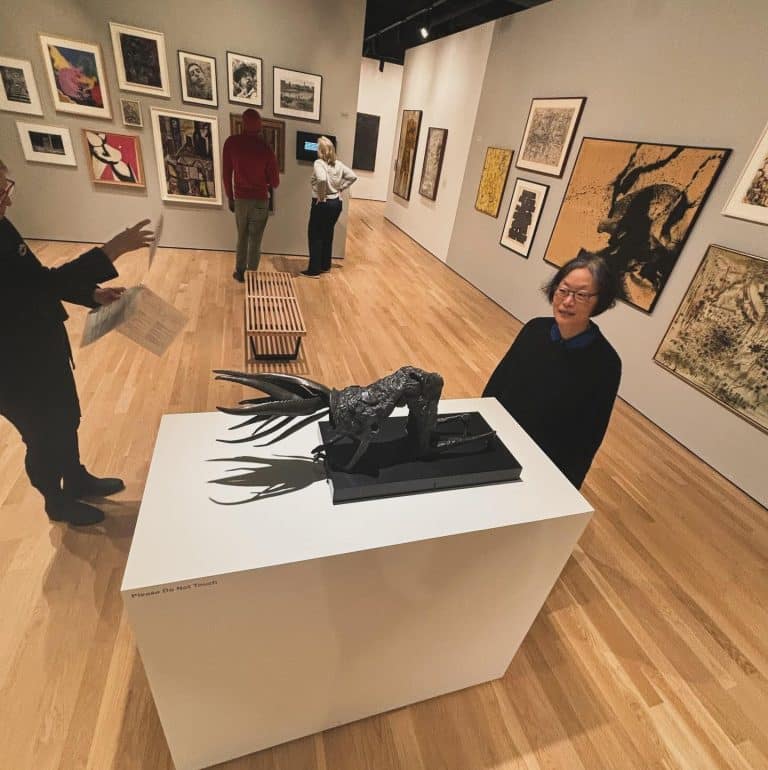
The new Grey Art Museum on Cooper Square is a true respite—featuring a wonderful show on American artists in post-WWII Paris.
Digital Art, the Analogue Backlash, and the Hybrid Future
Tom acknowledged how digital works have become more reliable and integrated in museums today. “It’s not an unusual aspect of any show to have digital technology as part of it. It’s just part of life.” Yet his return to Art Basel revealed an «analogue backlash,» with painting reclaiming dominance. The NFT moment, he noted, «was a crazy bubble,» even as he praised «incredible videos» he saw from Indonesian artists at the Bukhara Biennial. For Tom, digital and physical practices will continue to coexist, but the human-made remains essential.
Art in Civic Life and the Responsibility of Institutions
Tom stressed that proper civic integration of art lies not in technology but in people. Through the Public Artists in Residence (PAIR) program, “three or four artists per year are integrated into city government” as “visual problem solvers” across departments. He also discussed augmented reality, noting “very good examples” but acknowledging that “it’s not that big of an aspect of the art world” yet, largely due to usability issues: «We’ve got a way to go before that becomes really easy to use for audiences.»
Social Media and the Need for Contemplation
On social media, Tom was blunt: “I don’t like it. And I wish I was spending less time on it.” He recognised its necessity for visibility but warned these platforms «amplify outrage.» Museums, he suggested, must offer the opposite — spaces of contemplation rather than acceleration — a belief that aligns deeply with Elisium Art’s mission.
Q&A HIGHLIGHTS
Commissioner of the DCLA or Director of the Queens Museum?
“The commissioner was more power and the director of the Queen’s Museum was more fun.”
PS1 parties of the ‘80s or Percent for Art commissions of the ’90s?
«PS1 — I was young. Being young is more fun.» A lot of tension is involved in public art.»
Most essential part of the Queens Museum’s $68M renovation?
«We boiled our mission statement down to one word, which was openness. That was the key to the architecture and the key to the community organisers.»
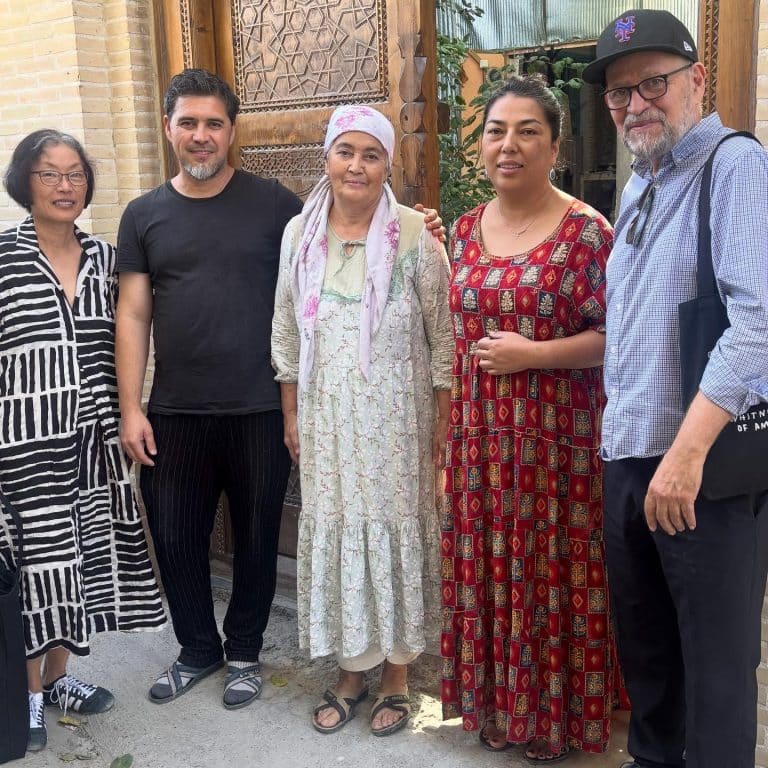
Visited Abdulvahid Bukhoriy’s studio and met his family—his Bukhara Biennale installation beautifully explores blueness and submersion inspired by Central Asia’s blue domes.
Topic of his next book:
“How can museums open the doors?”
Which book is more relevant today — Dialogues in Public Art or What We Made?
“I think that What We Made is more relevant to today.”
What creates trust when selling art online?
“Trust is created in the end product of the sale… people getting something they have in their home that they love and telling other people.”
Princeton BA or Hunter MFA — which prepared him more for public office?
“Hunter College, for sure, because it’s in New York City. It’s the people’s college.” “But I had a great undergraduate experience”.
Queens Museum or Times Square Arts — where was the fiercest bureaucratic battle?
“Queens Museum was a moment of professional bliss for me… a job I never would have left except I felt I had to go become commissioner to be true to my values.”
Closing Reflections: The Human Core of Art
As our conversation concluded, one truth stood out: art remains profoundly human. Technology may expand it, politics may complicate it, and markets may influence its path — but the essence endures. Artists create meaning, communities give it context, and institutions must protect the space between them.
This is the future Elisium Art works toward: one where artists across Latin America, Africa, India, and beyond don’t wait at the margins but step through an open door.
Though our Curator Spotlight series has welcomed many important voices, this conversation marks our first virtual interview with someone of Tom Finkelpearl’s stature. We are deeply grateful that he shared his clarity, humour, and experience with us — a dialogue that moved from museums and civic systems to technology and authorship. Tom’s generosity reminds us why these conversations matter: they challenge assumptions, deepen understanding, and open new possibilities. We extend our sincere thanks to him for honouring our series and allowing Elisium Art to bring his insights to our global community.
Escrito por
Kritika Saikia
Kritika Saikia is a writer and aspiring filmmaker with a passion for storytelling and a deep appreciation for the visual arts. Based in Guwahati, she brings a unique perspective to the Elisium Art marketing team, blending her love for narratives with a keen understanding of contemporary art. Her background in filmmaking and social media management allows her to craft engaging content that connects audiences with the diverse world of art, from the Western masters to the rich traditions of South Asian art. Kritika is dedicated to making art accessible and meaningful to all, using her writing and storytelling skills to illuminate the beauty and depth of artistic expression.
Las obras más vistas entre nuestros lectores

The Story of an Owl
36 W x 36 H Inch
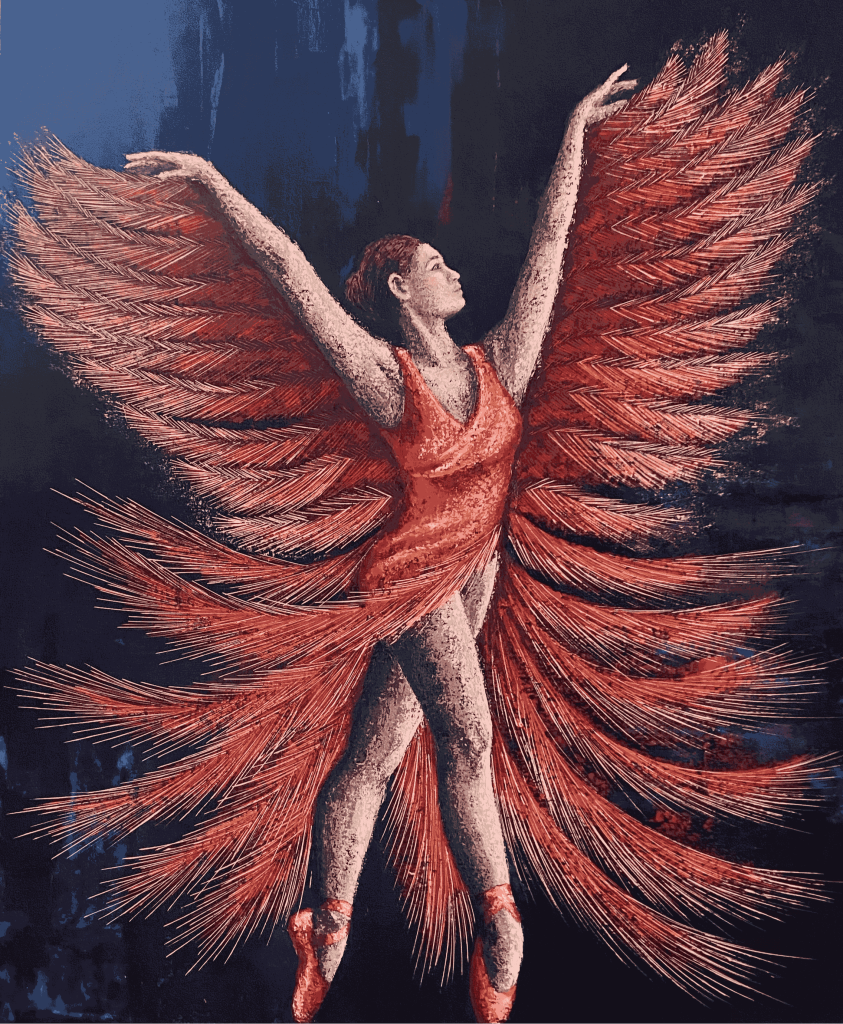
Pleasure Goddess
36 W x 48 H Inch

Ganesha
20 W x 24 H Inch

The More I Blossom (Print)
16 W x 20 H Inch

The Story of Peacock
72 W x 36 H Inch

The Story of a City
48 W x 36 H Inch