

 lOG IN





Timeless Love: 7 Most Famous Valentine’s Day Artworks

Written by Manasvi Vislot
Views 245
 Published on January 20, 2026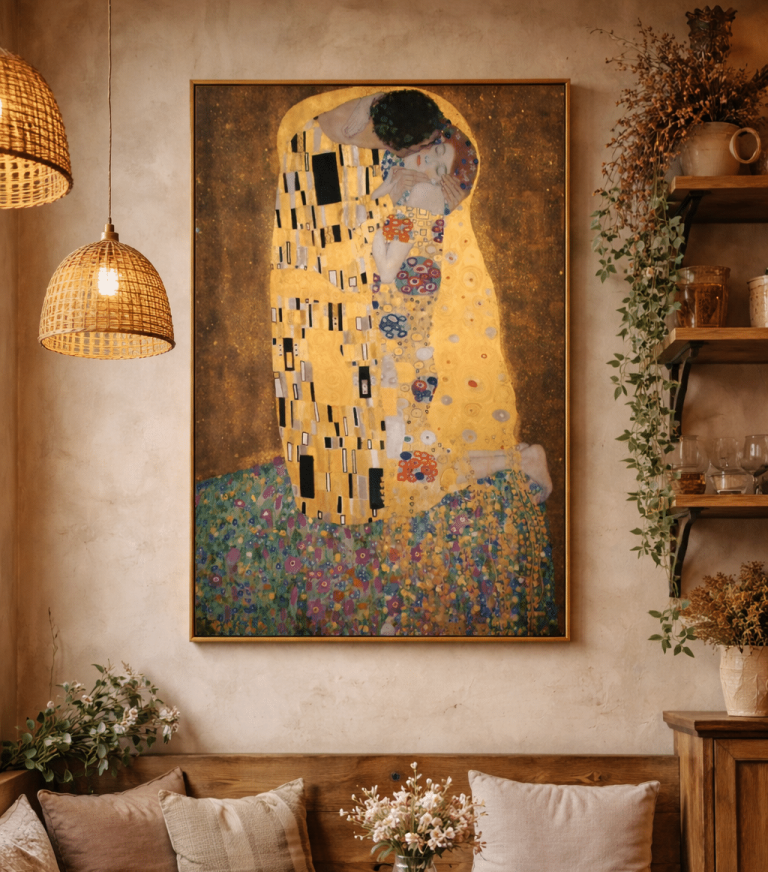
the kiss by gustav klimpt
Love has always been one of art’s most enduring subjects. Long before Valentine’s Day became a commercial holiday, artists were already exploring passion, intimacy, longing through paint . Valentine’s Day art reclaims its relevance: not as decoration, but as a language of feeling that outlives the occasion itself.Across centuries, artists have captured love in radically different ways, from gilded embraces to weightless kisses and symbolic hearts. Together, these works form a visual history of romance, making them some of the most famous Valentine’s Day artworks ever created.
1.Gustav Klimt’s The Kiss – The Ultimate Romantic Embrace
Few paintings have come to define romantic art as completely as Gustav Klimt’s The Kiss. Created during his famed Golden Phase, the work envelops two lovers in shimmering gold, dissolving the boundary between bodies and background. The painting has become a universal symbol of intimacy, often cited as one of the most iconic romantic paintings in art history. Museum curator Alfred H. Barr Jr., founding director of MoMA, once wrote that “Great art is not what you see, but what you make others see.” Klimt’s masterpiece does precisely that—inviting viewers to feel love as immersion rather than observation.
2. Marc Chagall’s The Birthday – Floating in Love
Marc Chagall approached love with wonder rather than grandeur. In The Birthday, the artist depicts himself floating mid-air to kiss his partner, defying gravity and logic alike. The scene is intimate, playful, and deeply personal, capturing the emotional lightness that early love often brings. Chagall’s work reminds us that romance in art does not always need spectacle; sometimes, joy itself is the subject. This dreamlike quality makes it a timeless source of Valentine’s Day art inspiration.
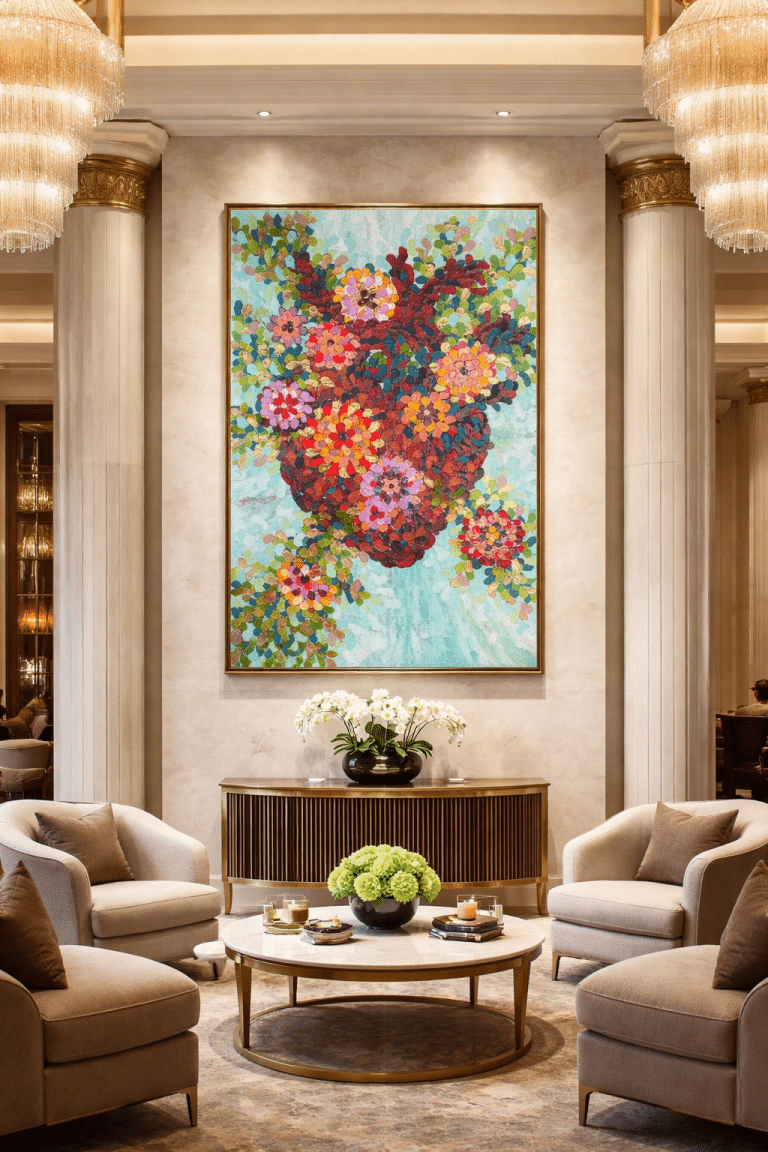
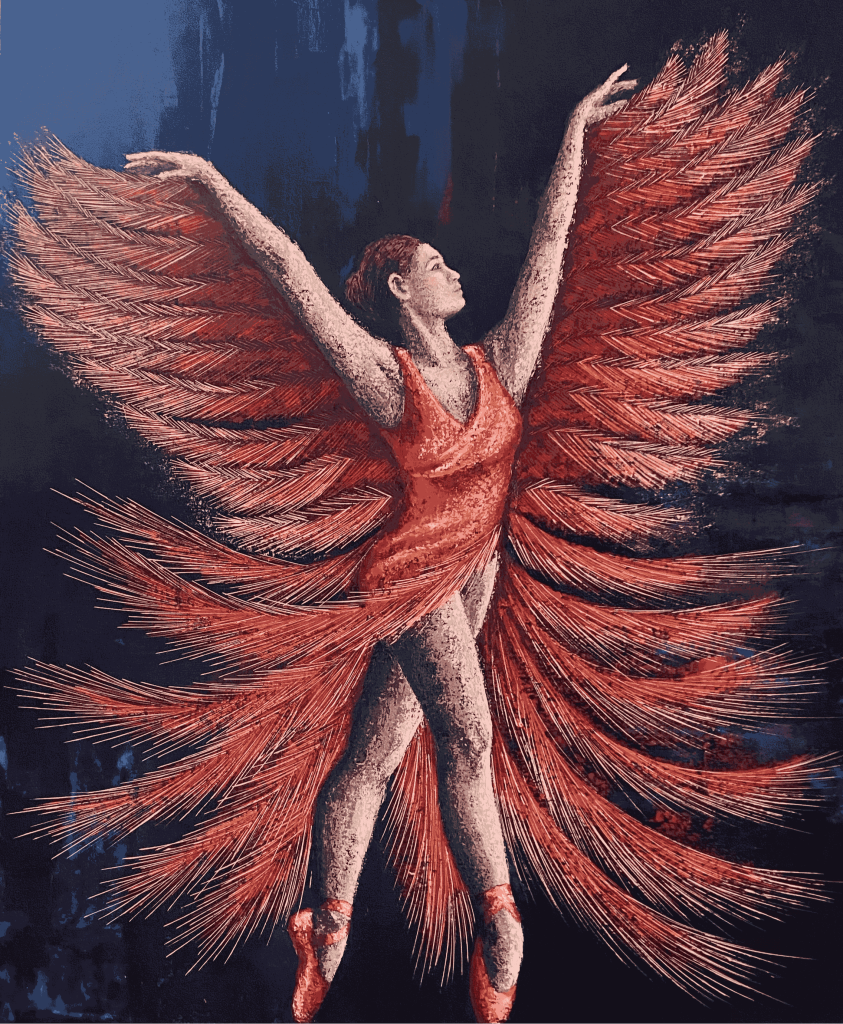
3. Sylvia Barrero’s The More I Blossom – Contemporary Valentine’s Day Art
Bridging classic romantic themes with contemporary sensibility is The More I Blossom by Sylvia Barrero. Unlike historical depictions of love as a fixed state, Barrero’s work explores love as an emotional, personal, and evolving. Featured on Elisium Art, the piece reflects themes of transformation and inner expansion, making it a powerful example of modern wall art for Valentine’s Day that transcends the season.
This approach aligns closely with The HeArt Movement. Through #TheHeArtMovement, Elisium Art highlights artists who treat the heart not as decoration, but as emotional territory complex, resilient, and deeply human. The campaign encourages a rethinking of Valentine’s Day art as a form of truth-telling rather than performance, where love is understood as something that unfolds over time. Within this context, The More I Blossom becomes not just a romantic artwork, but a quiet statement about emotional growth, care, and the courage to remain open.
4. Banksy’s Girl with Balloon – Heart as a Universal Symbol
Though rooted in street art, Banksy’s Girl with Balloon has become one of the most recognized love-related images in contemporary culture. The red heart-shaped balloon, floating just out of reach, symbolizes hope, loss, innocence, and longing all at once. Its cultural reach goes far beyond galleries, proving that heart painting art does not need traditional formats to resonate. The artwork’s endurance reflects how modern audiences connect with emotionally direct, symbolic imagery.
5. Ingres’s Raphael and La Fornarina – Love as Artistic Inspiration
Jean-Auguste-Dominique Ingres’s portrayal of Raphael and his muse, La Fornarina, is both tender and revealing. It offers a glimpse into the private emotional life of an artist, underscoring how romantic relationships have historically fueled artistic creation. This painting stands as a reminder that love has long been a source of inspiration, not just subject matter, an idea that continues to shape contemporary romantic art.
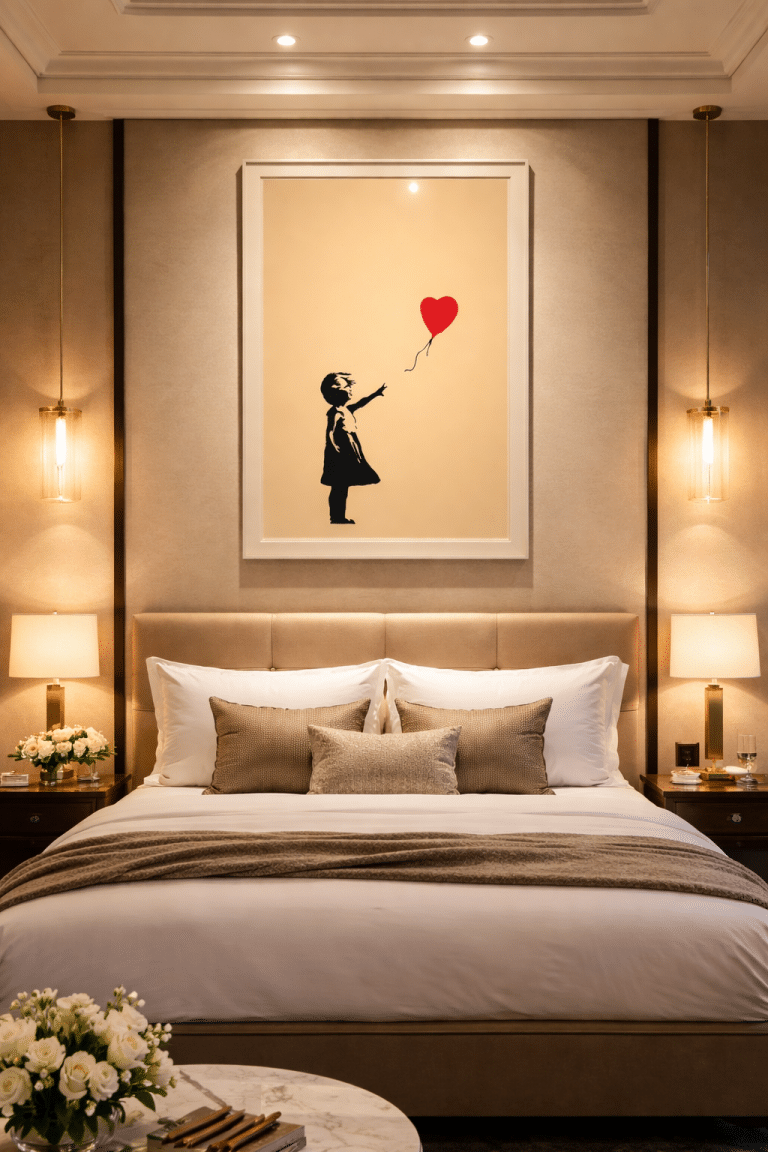
girl with balloon by banksy
6. Marie Spartali Stillman’s Love’s Messenger – A Poetic Romantic Scene
In Love’s Messenger, a dove delivers a love letter, embodying Victorian ideals of affection, patience, and devotion. Rendered in watercolor, the work feels quiet and intimate, emphasizing anticipation rather than declaration. Stillman’s painting illustrates how romance in art can be subtle and narrative-driven, relying on suggestion rather than spectacle qualities that resonate strongly with collectors seeking emotionally nuanced works.
7. Auguste Rodin’s The Kiss – Love as Physical and Emotional Union
Auguste Rodin’s The Kiss brings romantic art into three dimensions, translating intimacy into sculptural form. Unlike painted depictions of love, Rodin’s marble figures feel almost alive, caught in a moment of suspended passion, where touch becomes the primary language. Originally conceived as part of The Gates of Hell, the sculpture evolved into one of the most celebrated representations of romantic connection in art history.
What makes The Kiss especially powerful as Valentine’s Day art is its balance between tenderness and intensity. There is no ornamentation, no symbolic backdrop, only the raw closeness of two bodies drawn together by emotion. This physical honesty aligns closely with contemporary audiences who seek authenticity over idealization. As romantic masterpieces go, Rodin’s work reminds us that love is not just something seen, but something deeply felt, making it a timeless inclusion alongside both historical icons and modern works like The More I Blossom.
Art That Keeps Love Alive
From Klimt’s gilded embrace to Chagall’s floating lovers and Barrero’s contemporary vision of growth, these romantic masterpieces in art history reveal one truth: love is endlessly interpretable. Valentine’s Day offers a moment to reconnect with this lineage not through temporary gestures, but through meaningful art. At Elisium Art, curated love-themed works extend beyond a single artist or style. Explore the broader collection of romantic and heart-inspired artworks.
In choosing art, you choose permanence. And in choosing love through art, you allow it to live on long after Valentine’s Day has passed.
Written by
Manasvi Vislot
Manasvi Vislot is an India based creative storyteller at Elisium Art. She blends global art trends with strategic digital insights, crafting content that connects readers with the evolving world of contemporary, digital, and cultural art. With her refined eye for aesthetics and a passion for making art accessible, Manasvi creates narratives that highlight the artists, ideas, and innovations shaping today’s creative landscape.