=
X
  • wishlist
  • cart
X

Iconic Pop Art Paintings Everyone Should Know

Manasvi Vislot

Written by Manasvi Vislot

Views 128

Published on January 6, 2026

Written by

Manasvi Vislot

Manasvi Vislot

Manasvi Vislot is an India based creative storyteller at Elisium Art. She blends global art trends with strategic digital insights, crafting content that connects readers with the evolving world of contemporary, digital, and cultural art. With her refined eye for aesthetics and a passion for making art accessible, Manasvi creates narratives that highlight the artists, ideas, and innovations shaping today’s creative landscape.
campbells soup pop art

 Campbell’s Soup Cans (1962) by Andy Warhol

Pop Art wasn’t simply about bright colors or famous faces. Behind every iconic Pop Art painting is a story of resistance, media obsession, war, fame, fear, and modern life. These artworks didn’t ask to be admired quietly. They demanded attention just like the world they reflected. 

Below are the most critical Pop Art artworks, told through the stories that made them legendary and why everyone should know them.

1. Andy Warhol – Campbell’s Soup Cans (1962)

The Day a Supermarket Entered the Museum

In 1962, when Warhol exhibited 32 identical soup cans, critics were furious. People asked, “Is this a joke?” Is this even art? But Warhol wasn’t mocking consumer culture; he was documenting it. He grew up poor, eating Campbell’s soup almost daily. To him, the soup can was democratic: rich or poor, everyone ate the same thing. 

The Story Behind It: How a Quiet, Anxious Man Redefined Art Without Raising His Speech

Andy Warhol was not loud or rebellious in the traditional sense. He was shy, deeply insecure, and obsessed with fitting in. Growing up in a working-class immigrant family, Warhol spent long periods bedridden as a child due to illness. During those years, he became obsessed with repetition, routine, and popularimagery, things that appeared stable and predictable. When Warhol chose Campbell’s Soup, it wasn’t ironic. It was familiar. 

He once said he ate the same soup for lunch every day for 20 years. When he painted the soup cans, he removed the artist’s hand almost entirely. No drama. No emotion. Just presence. The shock wasn’t the soup; it was the question it raised: 

If this is what our lives revolve around, why shouldn’t it be art? 

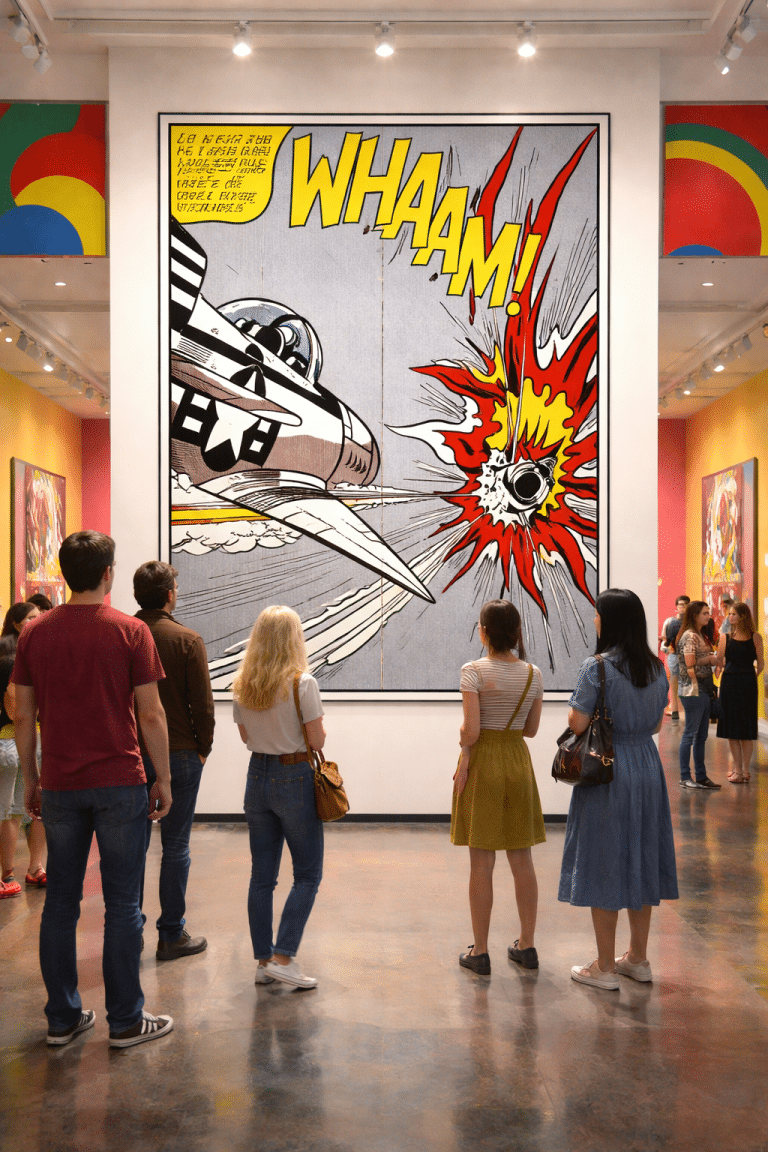
Roy Lichtenstein – Whaam! (1963) 

Whaam! (1963) by Roy Lichtenstein  

2. Roy Lichtenstein – Whaam! (1963)

When Comic Books Became Fine Art

Lichtenstein took a single comic panel of a fighter jet exploding and turned it into a monumental painting. But he didn’t simply copy it; he removed emotion, cleaned it up, and recreated it with industrial precision. 

The Story Behind It: The Cold War, Comic Books, and Emotional Distance 

Lichtenstein served in the U.S. Army during World War II. He knew real violence but chose to depict it through comic-book detachmentWhaam! Came at a time when Americans were consuming war through television, headlines, and pulp imagery. The Vietnam War was looming, but the emotional cost seemed remote. By freezing a comic-book explosion into a massive painting, Lichtenstein highlighted something disconcerting: 

The war had become visually exciting and emotionally numbing. He didn’t exaggerate emotion; he erased it. The explosion is loud. The painting is silent. 

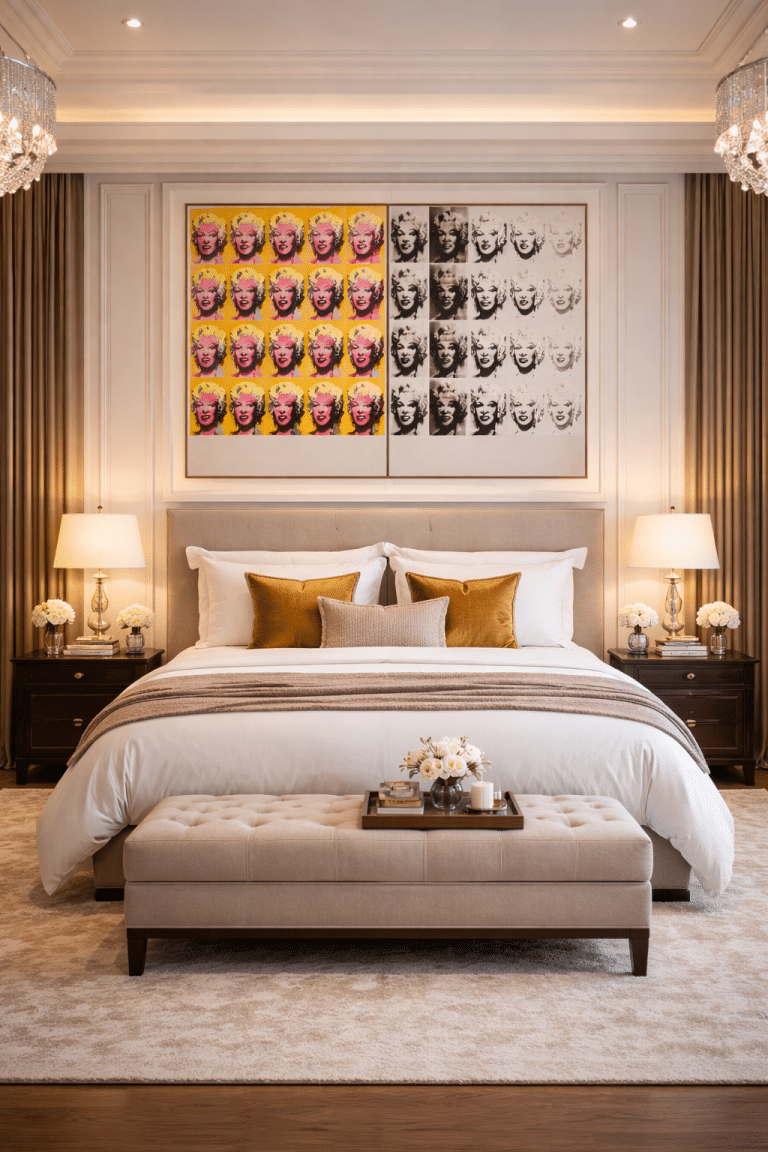
Marilyn Diptych (1962) by Andy Warhol

3. Andy Warhol – Marilyn Diptych (1962)

Fame, Repetition, and Disappearance

After Marilyn Monroe’s sudden death, Warhol used a publicity photo and repeated her face 50 times. Half the image is bright and glamorous. The other half slowly fades into darkness. 

The Story Behind It: When Fame Outlives the Person 

Marilyn Monroe died suddenly in August 1962. The world responded the only way it knew how by reproducing her image endlessly. Warhol saw something haunting in that reaction. Using a single publicity still, he repeated Marilyn’s face over and over. At first, she shines brightly, glamorously, and immortally. Then slowly, she fades. Ink misaligns. Features dissolve. Warhol was not mourning Marilyn. He was exposing how fame works.

Celebrities are remembered as images, not people. 

 F-111 (1964–65) by James Rosenquist

4. James Rosenquist – F-111 (1964–65)

The Billboard That Exposed America’s Anxiety 

Rosenquist once painted advertisements on highways. He knew how images manipulated desire. In F-111, he fused: 

A nuclear fighter jet, A smiling child, Spaghetti, A mushroom cloud 

All in one overwhelming visual loop. 

The Story Behind It: When Advertising, Childhood, and Nuclear Fear Collided

Before becoming a fine artist, Rosenquist painted billboard-sized advertisements looming over American highways. He understood how images manipulate desire. While painting F-111, America was deep in Cold War paranoia. Nuclear weapons were being normalized. Consumer culture promised happiness while quietly living under the threat of annihilation. Rosenquist stitched assembled fragments: 

A fighter jet, a smiling child under a hair dryer, Pasta, and explosions. The painting overwhelms because that’s precisely how modern living appeared. 

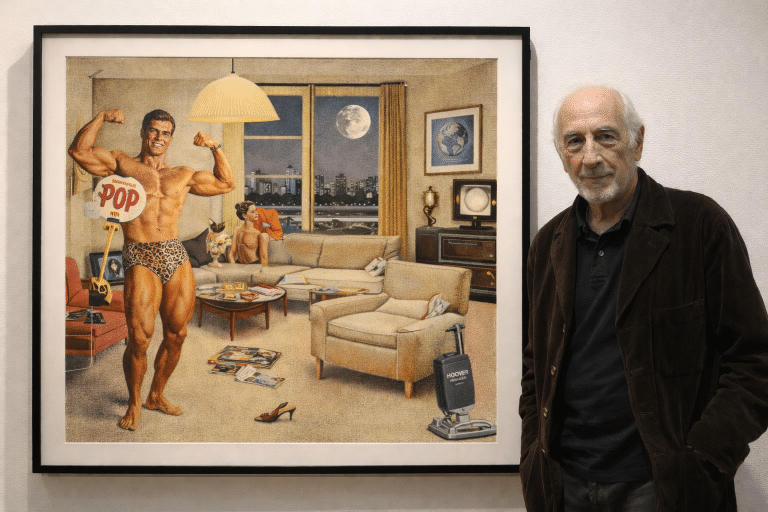
 Just what is it that makes today's homes so different , so appealing ? by Richard Hamilton

5. Richard Hamilton –  Just what is it that makes today’s homes so different? 

The Birth of Pop Art Before the World Noticed

Before Warhol. Before Lichtenstein. Hamilton created this collage in post-war Britain. It showed a modern home stuffed with: 

  • TVs 
  • Tape recorders 
  • Bodybuilders 
  • Vacuum cleaners 
  • Comic art     


The Story Behind It: The Intellectual Birth of Pop Art 

Hamilton was not fascinated by consumer culture; he was suspicious of it. In post-war Britain, American advertisements flooded Europe, selling a dream of abundance. Hamilton assembled that dream into a single room and exposed its absurdity. 

The muscular man, the vacuum cleaner, the TV, the tape recorder, none of them feels lived in. It feels staged. That was the point. Hamilton didn’t celebrate pop culture. He analyzed it. 

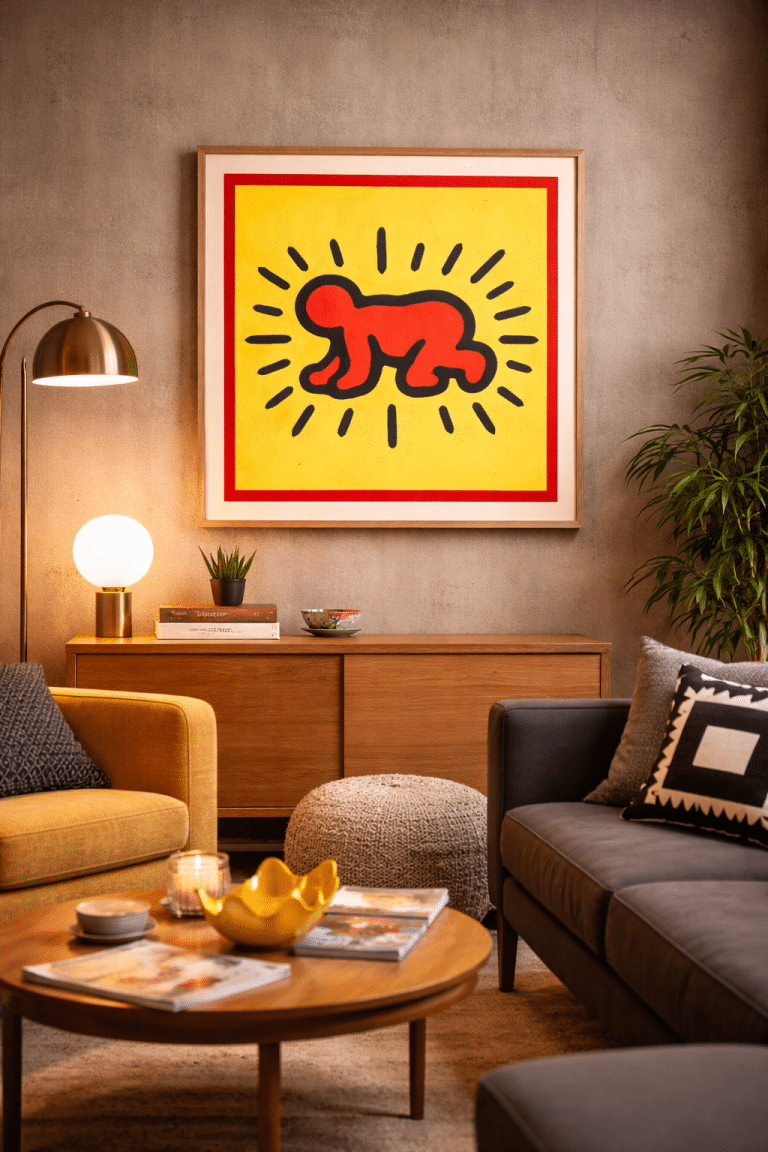
Radianr Baby

Radiant Baby (1982) by Keith Haring

6. Keith Haring – Radiant Baby (1982)

Pop Art Returns to the Streets

Haring drew this symbol in subway stations using chalk. It became a universal sign of life, hope, and energy. 

The Story Behind It: Hope Drawn in Chalk During a Crisis 

Haring believed art should be public, immediate, and human. During the AIDS crisis, as fear and silence spread, Haring filled subway stations using icons of life and energy. The baby wasn’t innocent; it was a possibility. This symbol shows how Pop Art evolved as activism and reclaimed optimism. 

Bigger Splash by David Hockney

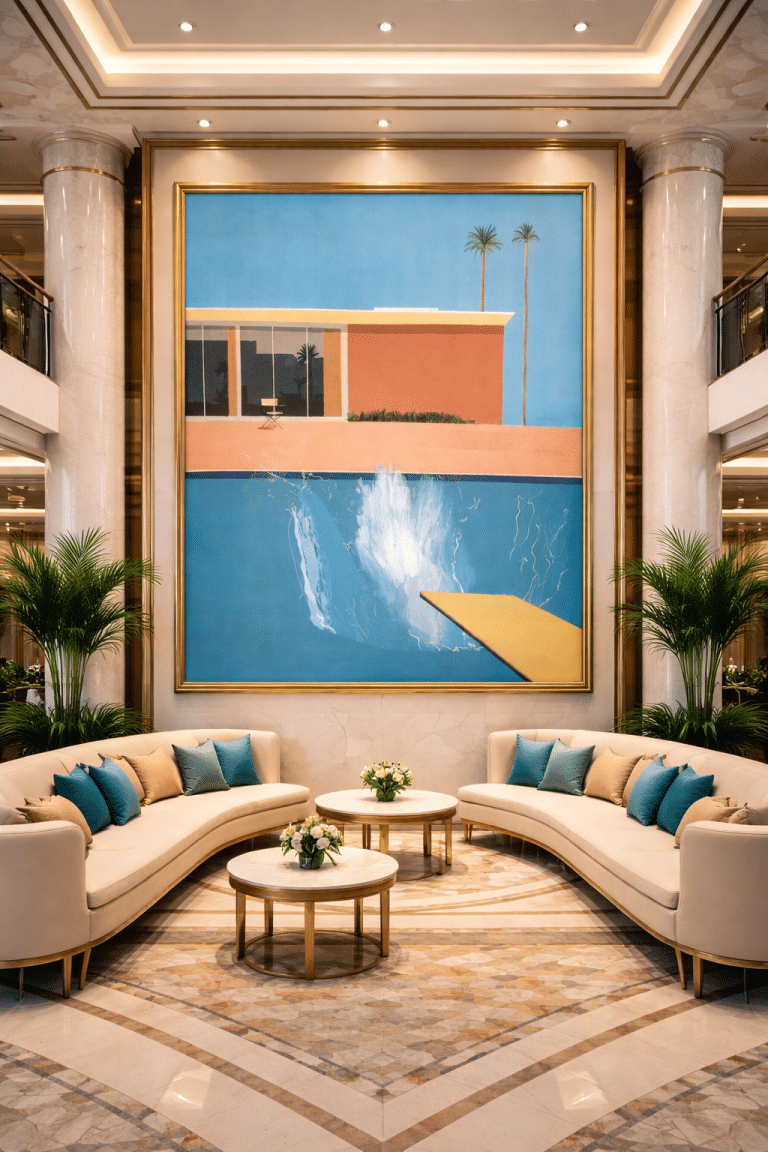
A Bigger Splash (1967) by David Hockney

7. David Hockney – A Bigger Splash (1967) 

David Hockney’s A Bigger Splash captures the spirit of 1960s California through a moment of frozen motion and quiet emotion. After moving from post-war Britain to Los Angeles, Hockney found freedom in the city’s sunlight, modern architecture, and social openness, an experience that profoundly influenced his art. The swimming pool, a recurring subject for him, symbolized controlled pleasure and private desire, nature formed by design. 

In this painting, Hockney carefully renders a dramatic splash while removing the diver, turning a passing second into a lasting stillness. The absence of the figure suggests presence without visibility, echoing themes of privacy and longing, particularly resonant in a time when queer identity remained largely unseen. Unlike the ironic detachment common in American Pop Art, Hockney infused the movement with personal emotion, making A Bigger Splash equally joyful and delicately melancholic, a timeless reflection on freedom, desire, and modern life. 

The Story Behind It: California Dream, Frozen Time, and Invisible Presence 

Bigger Splash captures a perfect Californian moment just after it happens. By removing the swimmer and focusing only on the splash, David Hockney turned leisure into absence and movement into stillness. The painting reflects the controlled glamour of 1960s Los Angeles sunny, effortless on the surface, yet carefully constructed beneath. It’s a quiet Pop Art statement about desire, privacy, and moments designed to be seen rather than lived. 

Target with Four Faces

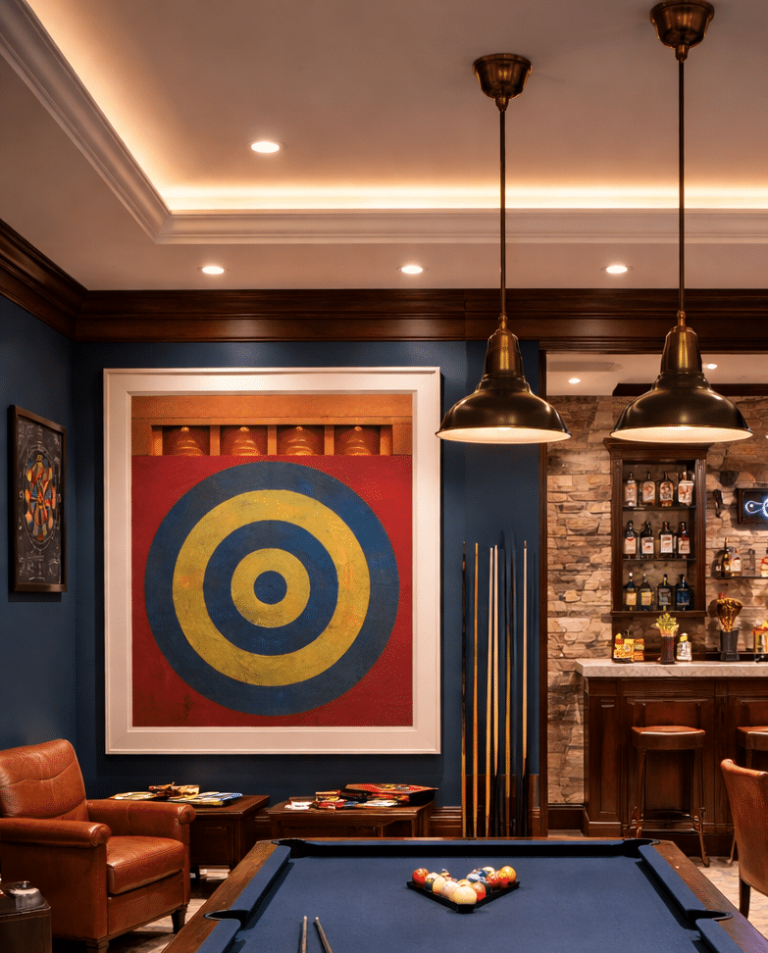
 Target with Four Faces (1955) by Jasper Johns

8. Jasper Johns – Target with Four Faces (1955) 

Jasper Johns’ Target with Four Faces transforms two ordinary images, the shooting target and the human face, into something quietly unsettling. The target’s bold concentric circles suggest exactness and focus, while the four plaster faces above it are partly hidden behind a wooden lid, as if deliberately censored. By choosing symbols that were already familiar and emotionally neutral, Johns removed self-expression from the work and forced observers to question whether they were looking at an image, an object, or an idea. The piece blurred the boundary between painting and sculpture, serving as a pivotal bridge between Abstract Expressionism and Pop Art, shaping how later artists used recognizable imagery without narrative or emotion. 

The Story Behind It: Symbols, Identity, and the Refusal to Explain

In Target with Four Faces, Jasper Johns took a familiar symbol and stripped it of meaning. The target is something everyone recognizes, yet it points to nothing specific. By placing fragmented faces above it, partly hidden, Johns created tension between seeing and knowing. Made in the mid-1950s, the work rejected emotional expression and personal storytelling, challenging viewers to confront images without explanation. It marked a turning point between Abstract Expressionism and Pop Art, where meaning was no longer felt  it was questioned.

From Canvas to Culture: How Pop Art Never Really Ended 

Pop Art didn’t fade into history; it quietly became the language of our everyday lives. Every logo we recognize instantly, every meme that spreads in seconds, every influencer image engineered for attention follows the visual rules these artists first revealed. They showed us that images are never innocent. What we see repeatedly begins to shape how we think, desire, and identify ourselves. By turning the commonplace into art, Pop artists taught us to slow down, look harder, and question the world selling itself to us, a lesson that seems more urgent today than ever before. 

Manasvi Vislot
Written by

Manasvi Vislot

Manasvi Vislot is an India based creative storyteller at Elisium Art. She blends global art trends with strategic digital insights, crafting content that connects readers with the evolving world of contemporary, digital, and cultural art. With her refined eye for aesthetics and a passion for making art accessible, Manasvi creates narratives that highlight the artists, ideas, and innovations shaping today’s creative landscape.

Most Viewed Artworks Among Our Readers

Whisper of the Tree

Whisper of the Tree

$4,020

36 W x 48 H Inch

Explore
The Story of an Owl

The Story of an Owl

$3,020

36 W x 36 H Inch

Explore
Pleasure Goddess

Pleasure Goddess

$1,700

36 W x 48 H Inch

Explore
Ganesha

Ganesha

$2,180

20 W x 24 H Inch

Explore
The More I Blossom (Print)

The More I Blossom (Print)

$150

16 W x 20 H Inch

Explore
The Story of Peacock

The Story of Peacock

$6,540

72 W x 36 H Inch

Explore

Let us inspire you

Ft Newsletter Two Ft Newsletter Two
Please enter a valid Email Address.