

 lOG IN





Curator Spotlight: Julia Greenway on Contemporary Art, Technology, and the Future of Experience
Written by Kritika Saikia
Views 163
 Published on January 28, 2026
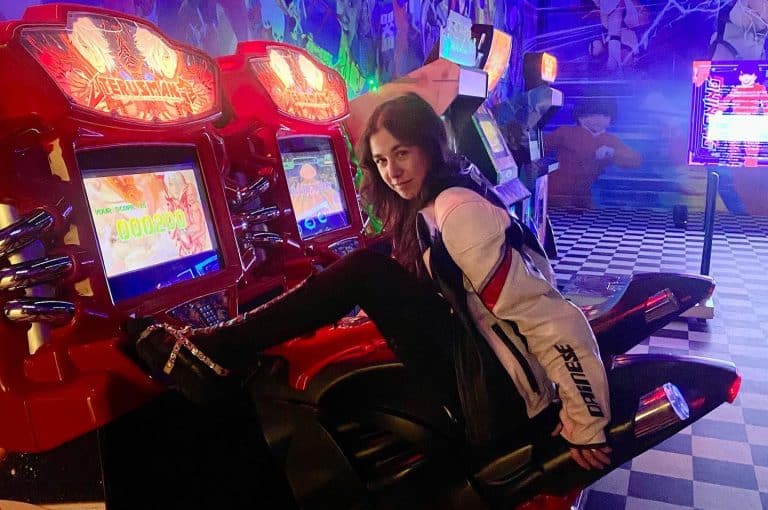
Lu Yang's Neti Neti
For our third virtual conversation in the Elisium Art Curator Spotlight series, we are thrilled to bring forward a voice at the intersection of contemporary art, technology, and audience experience. Julia Greenway, a curator whose practice spans emerging media, digital innovation, and experimental exhibition-making, joins us to explore what it means to mediate art in the rapidly evolving cultural landscape.
From grassroots, artist-led project spaces in Seattle to internationally engaged exhibitions and curatorial work in London, Julia’s journey reflects a sustained commitment to expanding how audiences encounter art, not as passive viewers, but as active participants. Her curatorial approach resists spectacle for its own sake, instead asking deeper questions about embodiment, interaction, and the evolving role of technology within cultural spaces.
In this conversation, Julia reflects on her path into curating, the realities of working with digital and immersive practices, the curator’s responsibility in an age increasingly shaped by AI, and the delicate balance between conceptual rigor and public accessibility. What emerges is a portrait of a curator deeply invested in mediation, between artist and audience, machine and body, theory and lived experience.
What follows is a closer look into Julia Greenway’s thinking, practice, and provocations, followed by a rapid-fire segment that reveals the instincts and curiosities guiding her work today.
From Maker to Mediator: How Julia Entered the World of Curation
Julia’s path into curatorial practice did not begin in a classroom or institution, but as a response to a gap she observed in her creative community. After training as a painter, she relocated to Seattle, Washington, in 2011, a place where experimental, time-based media and contemporary practices were seldom showcased. Rather than waiting for opportunities, Julia created them.
She began with nomadic pop-up exhibitions, even experimenting with a mobile gallery space, driven by curiosity and a desire to support peers rather than personal ambition. She recalls that her early projects:
“…allowed the audience to engage with the work as players and in really accessible… intuitive ways.”
With this foundation, she established Interstitial, a project space dedicated to commissioning artists working with time-based and digital media. What began with a shoestring budget grew into a platform for dialogue, experimentation, and direct engagement locally and internationally.
Balancing Concept and Access: Curating for All
A defining thread in Julia’s practice is her insistence on creating exhibitions that are both conceptually rigorous and genuinely accessible. She believes that accessibility isn’t only about explanatory labels or guide texts, but about how audiences move through and interact with work. For example, in Lu Yang’s exhibition, an arcade installation allowed visitors to intuitively play with joysticks and buttons, forging a direct, familiar relationship with complex thematic content.
Julia explains that this approach:
“…allowed the audience to become these players in Lu Yang’s work that was really successful.”
In the group exhibition Among the Machines, she continued this balance by incorporating interactive, playful, and even humorous works, such as augmented-reality pieces and satirical installations that invite participation while provoking reflection on technology, embodiment, and digital futures.
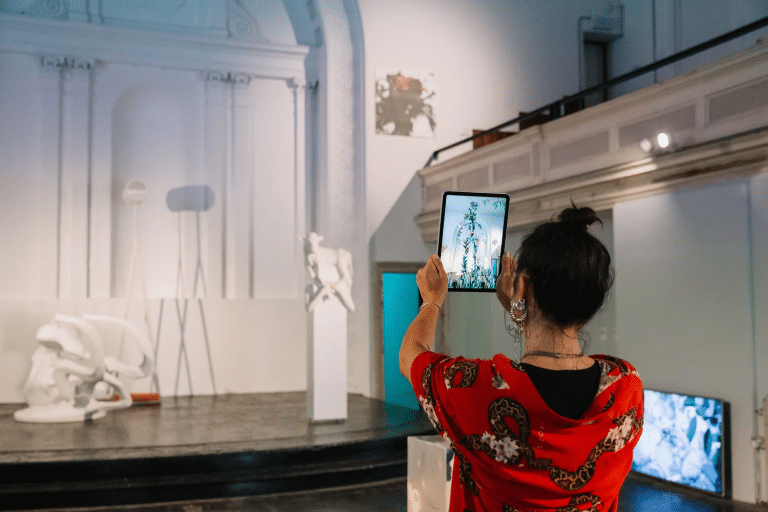
Among the Machine
A Curator at the Cusp of Change: Technology, AI, and Art
Julia acknowledges that we are living through a pivotal moment in technological evolution, where tools such as AI and machine learning are reshaping artistic practice, audience expectations, and even the curator’s role. Rather than seeing technology as a threat, she interprets it as a new frontier that demands curiosity, experimentation, and adaptability.
Of AI, she says:
“…AI is currently and will continue to be a tool, and artists will choose how to use it.”
Her perspective is neither utopian nor dismissive; it recognizes that technology can empower, provoke, and expand expression, while also raising complex questions about agency, authenticity, and the future of creativity.
Championing Non-Traditional Practices
Julia has long engaged with artists whose work doesn’t fit neatly within commercial gallery norms. She defines this “non-traditional” art not by style, but by urgent relevance and inventive modes of expression. She recalls her work supporting emerging artists through the Zabludowicz Collection Invites program. This platform created exhibition opportunities for artists early in their careers, helping them test ideas and build confidence.
She explains that working with diverse practices from video games to AR, from digital avatars to wearable technology, enriches the cultural field and opens pathways for new forms of audience engagement.
Challenges in the Curatorial Landscape
Despite the excitement around digital innovation and artistic diversity, Julia points out that sustaining cultural work is increasingly difficult. Funding constraints, shrinking institutional support, and rising costs make exhibition-making challenging, particularly outside commercial frameworks.
As she reflects:
“…as a curator you rely on institutions… and you don’t always have the resources, the partnerships, or the funding you need.”
Yet she remains committed to the urgency of cultural discourse, especially as the digital era accelerates.
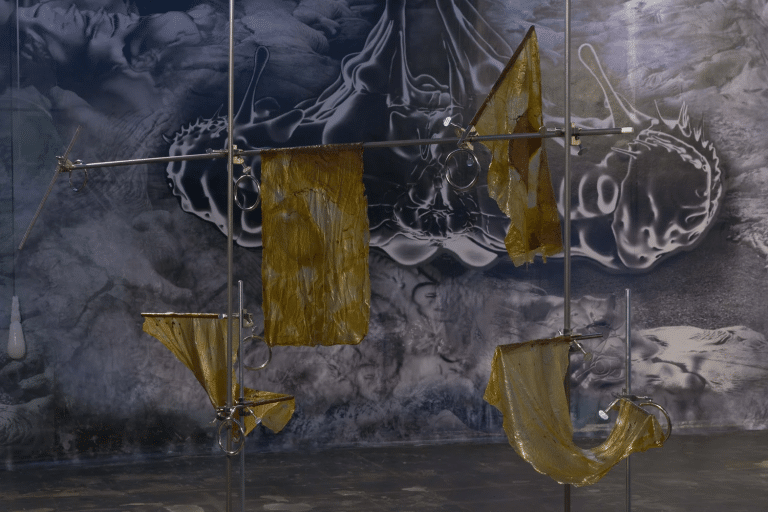
Among the Machine 2
Looking Ahead: Themes and Ideas that Drive Her
Julia’s research interests also span video game art, AI’s role in artistic practice, embodied interactivity, and performance. She sees the coming decade as a moment to integrate historical perspectives on digital art from its roots in the 1990s to its present evolution and position it within broader narratives of cultural production.
She is especially drawn to practices that explore embodiment, gaming culture, and immersive engagement areas, which she believes will define how audiences connect with art in the future.
Digital Platforms and Global Connectivity
When asked about the role of platforms like Elisium Art, Julia emphasized the power of visibility and global dialogue. For her, online platforms are not replacements for physical experience, but vital spaces for knowledge sharing, community building, and expanding access to international practices.
She believes that online conversations can complement gallery experiences, helping broaden understanding and connection across cultures and disciplines.

Curating the future of contemporary art
Rapid-Fire Reflections
- One exhibition you wish you had curated:
Pierre Huyghe’s Liminal at Palazzo Grassi during the Venice Biennale was an immersive retrospective that leveraged cutting-edge technology.
- One digital artist everyone should watch:
Tianzhuo Chen (Asian Dope Boys collective) is known for durational performance work that deeply engages viewers.
- A city that fuels your creativity:
London. It is known for its cultural diversity, access to institutions, and proximity to other European centers of art.
- An artwork that stopped you in your tracks:
Rip Germain’s immersive installation “Here. Anti Blackness is Bad. Even the parts that we like” is a visceral, experiential piece that reshaped her perspective.
- Your curatorial mantra:
Create work that presents a unique, urgent perspective that hasn’t been unpacked elsewhere.
- An underrated curator tool:
Public speaking and social mediator widening reach and encouraging accessible discourse.
- In one word, your curatorial style:
Maximalist, a celebration of layered, saturated, immersive experience.
- A dream project you hope to curate:
A performance-oriented exhibition built around wrestling a concept she is eager to realize.
A Conversation We Carry Forward
Julia Greenway’s practice speaks directly to the questions shaping contemporary culture today: how technology redefines artistic experience, how audiences meaningfully engage with digital and immersive work, and how curators can thoughtfully bridge artist intent with public understanding. Her journey from grassroots, self-initiated projects in Seattle to internationally recognized exhibitions in London reflects a rare combination of curiosity, rigor, and care for both artists and audiences.
For us at Elisium Art, it has been a true privilege to host this conversation. We are deeply honored to feature Julia in our Curator Spotlight series and grateful for the openness, insight, and generosity she brought to this dialogue. Her reflections remind us that curation is not just about exhibitions, but about mediation, responsibility, and imagination, qualities that continue to inspire how art is created, shared, and experienced in an ever-evolving world.
Written by
Kritika Saikia
Kritika Saikia is a writer and aspiring filmmaker with a passion for storytelling and a deep appreciation for the visual arts. Based in Guwahati, she brings a unique perspective to the Elisium Art marketing team, blending her love for narratives with a keen understanding of contemporary art. Her background in filmmaking and social media management allows her to craft engaging content that connects audiences with the diverse world of art, from the Western masters to the rich traditions of South Asian art. Kritika is dedicated to making art accessible and meaningful to all, using her writing and storytelling skills to illuminate the beauty and depth of artistic expression.
Most Viewed Artworks Among Our Readers

Whisper of the Tree
36 W x 48 H Inch

The Story of an Owl
36 W x 36 H Inch
Pleasure Goddess
36 W x 48 H Inch

Ganesha
20 W x 24 H Inch

The More I Blossom (Print)
16 W x 20 H Inch

The Story of Peacock
72 W x 36 H Inch