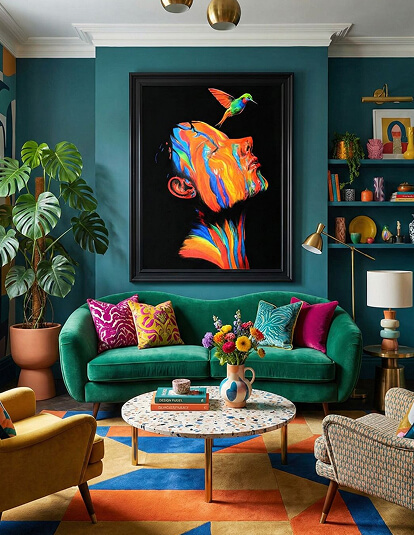


 lOG IN





Dining Room Masterpieces: The Art of Creating Conversations
Written by Manasvi Vislot
Views 50
 Published on 18 de junio de 2026
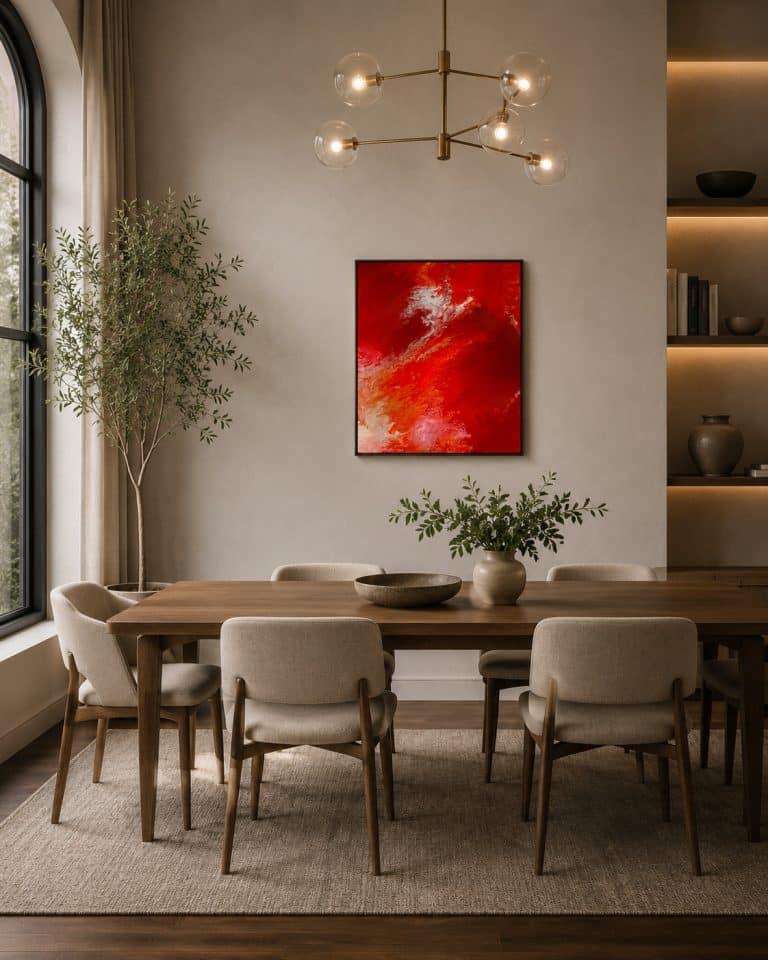
There is a moment that happens at every memorable dinner party. The food has been served. The first few conversations have started. Then almost unexpectedly someone’s attention drifts away from the table. Their eyes settle on a painting nearby. A question is asked. The story begins. Suddenly the artwork became part of the evening. The most successful dining rooms are rarely defined by their furniture alone. They are shaped by the experiences they create. Long after guests forget the menu, they often remember how the room felt and the details that sparked curiosity, conversation and real connection.
Nate Berkus once said that your home should tell the story of who you are and be a collection of what you love. Few rooms offer a better opportunity to tell that story than the dining room where people gather to celebrate, debate, connect, and create memories together. For anyone looking for dining room inspiration artwork is one of the most powerful tools available. More than simple decoration, it creates atmosphere, encourages interaction,and gives a room a personality that goes well beyond furniture and table settings.
What Kind of Artwork Works Best in a Dining Room?
Unlike bedrooms which focus on rest or entryways which focus on first impressions, dining rooms are social spaces. The artwork here should encourage engagement. The most successful dining room artwork often carries one or more of these qualities. Strong visual presence without overwhelming the room. Details that reveal themselves over time and reward repeat viewing. Themes that inspire conversation and interpretation. Colour palettes that complement the room rather than compete with it. And a sense of energy, movement, or storytelling that supports social interaction.
Kelly Wearstler often speaks about creating rooms that evoke emotion rather than simply matching colours. Dining rooms benefit greatly from this approach. The best pieces are not always the most obvious ones. They are the works that make guests pause, reflect and ask questions. One of the most common mistakes when choosing art for a dining room is selecting work that feels purely decorative. The strongest dining spaces use artwork as an active participant in the room’s experience.
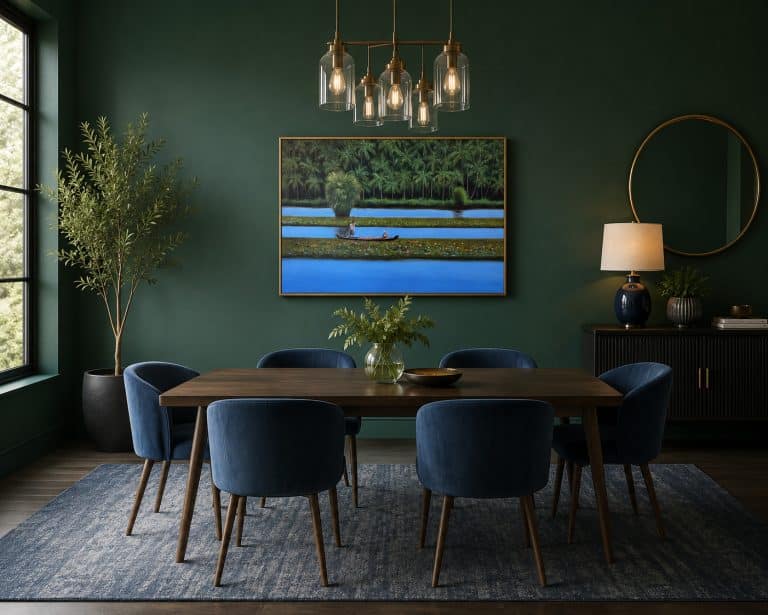
The Thought Behind the Dining Room Masterpieces Collection
The Dining Room Masterpieces Collection was curated around one simple idea. Great dining rooms thrive on conversation, curiosity, and visual discovery. Every artwork was chosen not just for how it looks but for how it adds to the experience of gathering around a table. This collection brings together artists whose works invite discussion, reward attention and keep revealing new layers the more time you spend with them.
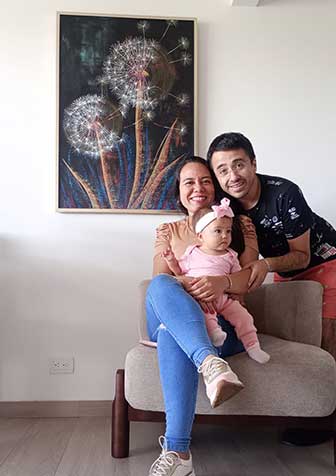
Claudia Cardona’s work is the kind that makes the dining room feel alive. Her use of colour and movement brings real energy into the space that fits so naturally with the whole experience of sharing a meal with people. Her compositions draw your eye in and before you know it someone at the table is pointing at the painting and a conversation has already started. That warmth and vibrancy she brings is not something you plan for. It just happens.
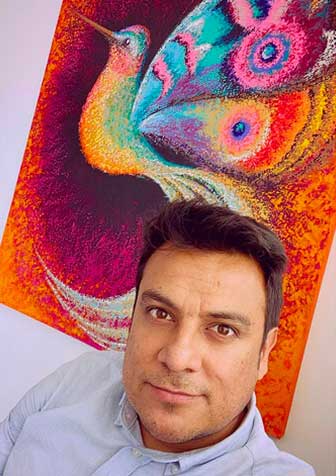
Drkusumlata Sharma’s artworks offer a very thoughtful balance of detail, narrative, and cultural richness. Her work encourages people to slow down and really engage with what they are looking at. This makes it particularly well suited to dining rooms where conversations tend to unfold gradually over the course of an evening. There is a quiet depth in her work that keeps giving the more time you spend with it.
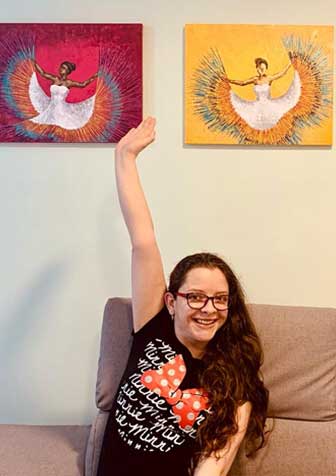
For collectors who appreciate contemporary perspectives, Jimena Romo Sirvent’s works bring layers of symbolism, imagination and visual intrigue that feel fresh and considered. Much like a memorable dinner conversation, her artworks reveal different meanings over time. Every time you look at her work you find something you did not notice before and that makes it very special in a dining space.
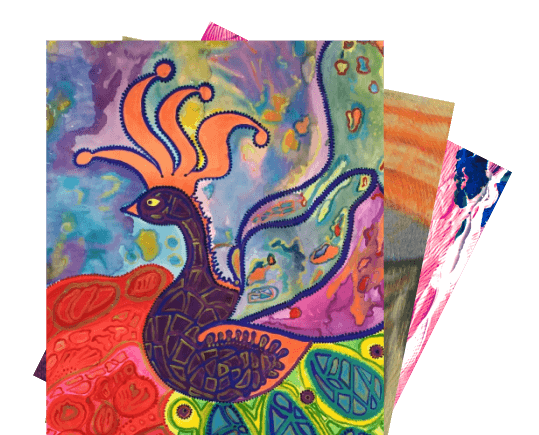
Prasanth KP’s works bring depth, character and a very strong artistic sophistication to the collection. His compositions have a strong visual presence while still maintaining a real sense of balance. This makes them ideal for dining spaces that want both elegance and personality without one overpowering the other.
Together, these artists create a collection that balances visual impact with intellectual engagement in a way that feels very natural. Their work turns dining rooms into spaces that do much more than just host meals. They encourage connection, spark conversation, and become part of the memories that get created around the table.
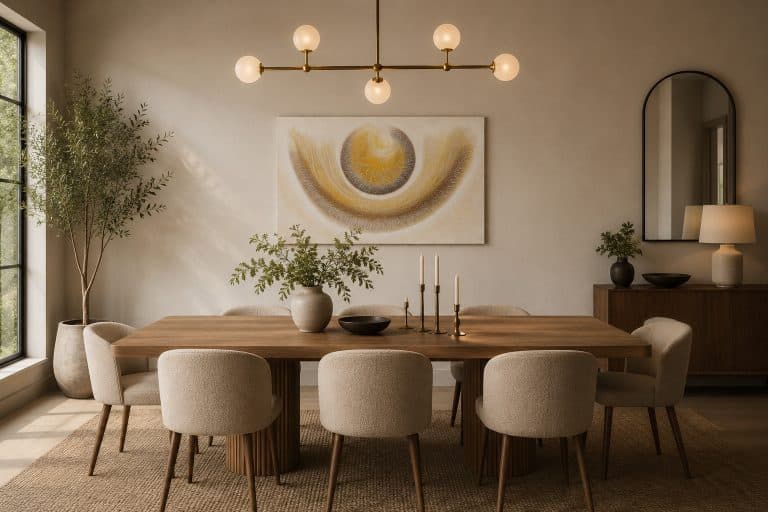
Where Should Artwork Be Placed in a Dining Room?
Placement plays an important role in how artwork actually interacts with space. A large statement piece on the main wall can establish a clear visual anchor and give the room an immediate sense of character. Artwork placed opposite the dining table naturally draws attention during meals and creates visual engagement throughout the room.
For larger dining spaces, a carefully chosen grouping of complementary works can help define the room while maintaining a strong sense of balance and cohesion.
A few simple things to keep in mind. Hang artwork at a comfortable viewing height when seated at the table. Scale artwork proportionally to the furniture and wall dimensions. Leave enough breathing room around each piece. And let one artwork become the primary focal point rather than creating multiple competing centers of attention. The goal is not to fill every wall. It is to create moments of visual interest that genuinely support the experience of gathering together.
Creating a Dining Room People Remember
The most memorable dining rooms are not necessarily the most formal or expensive ones. They are the rooms that make people want to stay a little longer after dessert. The rooms where conversations continue long after the plates have been cleared. The rooms where guests discover something new every time they come back.
Escrito por
Manasvi Vislot
Manasvi Vislot is an India based creative storyteller at Elisium Art. She blends global art trends with strategic digital insights, crafting content that connects readers with the evolving world of contemporary, digital, and cultural art. With her refined eye for aesthetics and a passion for making art accessible, Manasvi creates narratives that highlight the artists, ideas, and innovations shaping today’s creative landscape.
Las obras más vistas entre nuestros lectores

The Story of an Owl
36 W x 36 H Inch
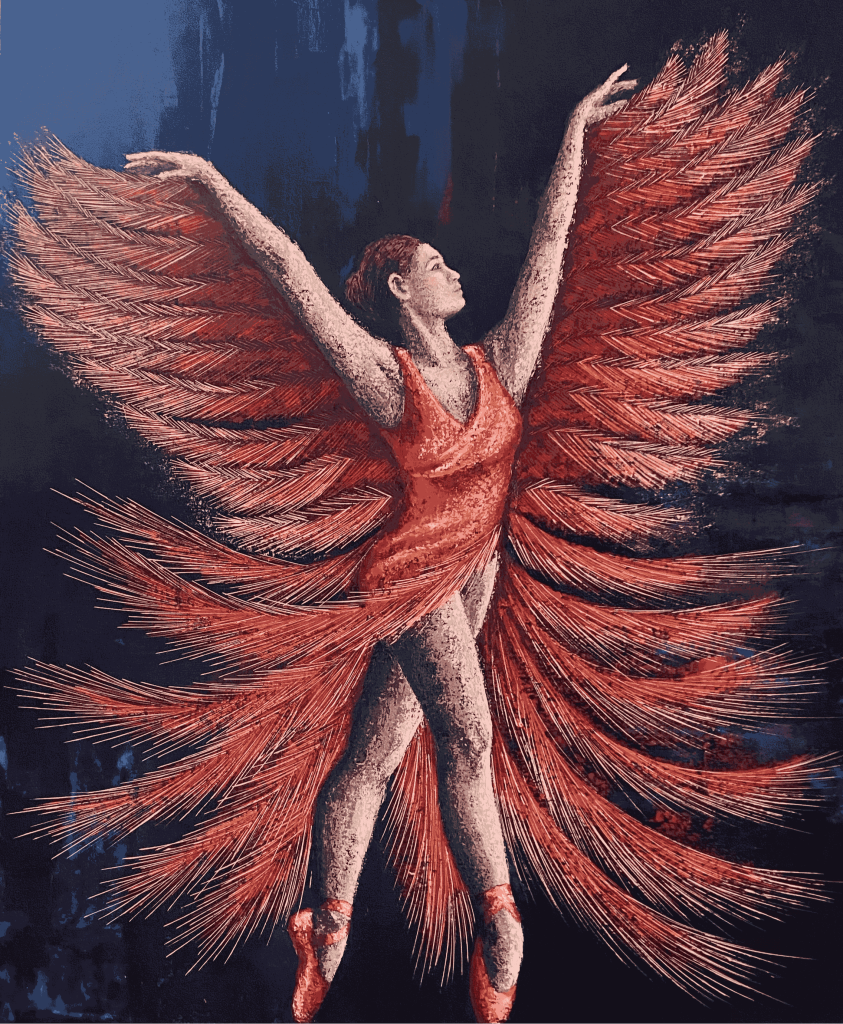
Pleasure Goddess
36 W x 48 H Inch

Ganesha
20 W x 24 H Inch

The More I Blossom (Print)
16 W x 20 H Inch

The Story of Peacock
72 W x 36 H Inch

The Story of a City
48 W x 36 H Inch