


 lOG IN





Who was Andy Warhol and which were his famous Paintings ?

Written by Manasvi Vislot
Views 214
 Published on 15 de enero de 2026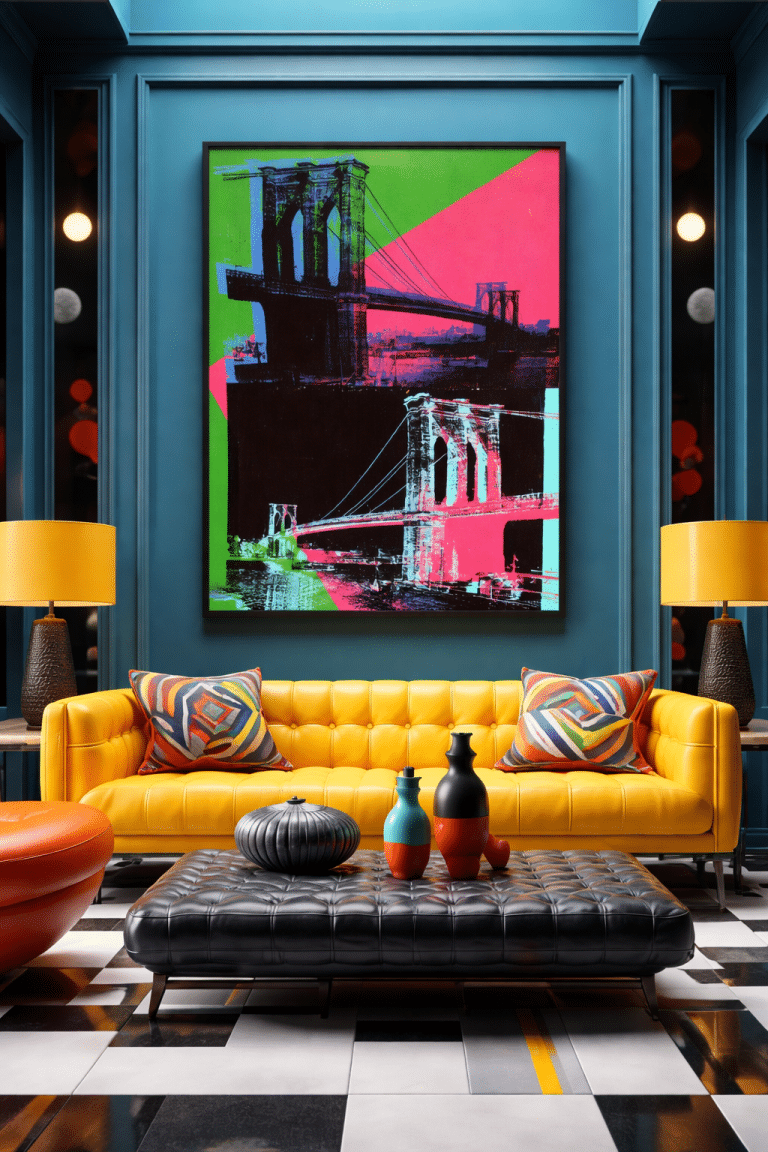
Brooklyn Bridge by Andy Warhol
Few artists transformed modern art as dramatically as Andy Warhol. Known as the leading figure of Pop Art, Warhol changed the way people understood art by turning everyday objects, celebrities, and consumer products into iconic artworks. From soup cans to movie stars, Warhol blurred the line between commercial design and fine art. His bold colors, repeated images, and fascination with fame made him one of the most influential artists of the 20th century.
When and Where Was Andy Warhol Born?
Andy Warhol was born on August 6, 1928, in the industrial city of Pittsburgh, United States.His birth name was Andrew Warhola, and he was the son of Slovak immigrants. Warhol showed artistic talent from a young age, often drawing and experimenting with visual media while growing up.He later studied commercial art at the Carnegie Institute of Technology, where he developed strong skills in illustration and design.
How Andy Warhol Started His Career
After graduating in 1949, Warhol moved to New York City, which was quickly becoming the center of the global art world.He began his career as a commercial illustrator, working for fashion magazines and advertising agencies. His distinctive drawing style soon made him one of the most successful illustrators in New York.However, Warhol wanted to move beyond advertising and create something new in the world of art. Inspired by mass media, Hollywood, and consumer culture, he started experimenting with imagery taken directly from popular culture. This experimentation eventually led him to become one of the founders of Pop Art.
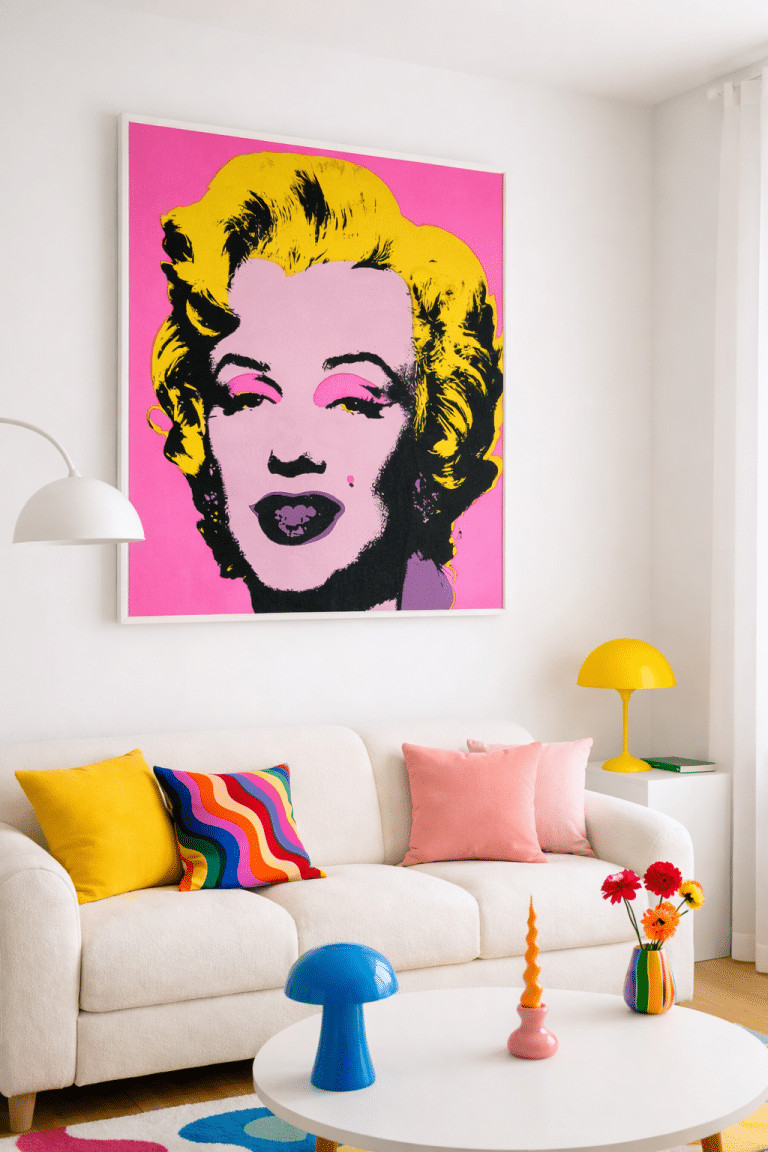
marilyn monroe by andy warhol
Andy Warhol’s Most Famous Paintings
Warhol created many iconic works that are now considered masterpieces of modern art. Some of his most famous paintings include:
1. Campbell’s Soup Cans (1962)
Campbell’s Soup Cans is one of Warhol’s most recognizable works. The series features 32 paintings, each representing a different flavor of Campbell’s soup. By painting a simple supermarket product, Warhol challenged traditional ideas about what subjects were worthy of fine art.
2. Marilyn Diptych (1962)
Marilyn Diptych features repeated images of the Hollywood icon Marilyn Monroe. Half of the canvas is brightly colored while the other half fades into black and white, symbolizing the contrast between celebrity glamour and mortality.
3. Eight Elvises (1963)
In Eight Elvises, Warhol repeated the image of rock-and-roll legend Elvis Presley dressed as a cowboy.The repetition reflects the mass reproduction of celebrity images in media and advertising.
4. Flowers (1964)
Flowers shows brightly colored floral forms printed repeatedly across the canvas. Although the subject appears simple and decorative, the work reflects Warhol’s fascination with repetition, color, and mechanical production.
Death, Fame, and the Media Spectacle
Warhol’s fascination with death is inseparable from his interest in fame. In his Death and Disaster series, car crashes, suicides, and executions appear as repeated newspaper images. The horror is not dramatized; it is normalized. This was not provocation for its own sake. Warhol understood that mass media transforms trauma into content. By repeating these images, he exposed how tragedy becomes consumable. Death, like celebrity, becomes another image to circulate. Fame, for Warhol, was equally hollow. Marilyn Monroe’s face appears again and again, beautiful and perfect yet increasingly ghostlike. The individual disappears beneath reproduction. As curator Donna De Salvo (Whitney Museum of American Art) has written, Warhol “revealed the fragility behind celebrity’s surface, showing how fame consumes the person it elevates.” In Warhol’s world, visibility replaces intimacy, and recognition replaces meaning.
What Made Andy Warhol Different From Other Artists?
Warhol’s approach to art was radically different from traditional painters.
1. He Used Mass Production Techniques
Warhol popularized the use of silkscreen printing, allowing him to reproduce images quickly and repeatedly. This technique mimicked the way advertisements and newspapers printed images. Instead of focusing on a single handmade artwork, Warhol embraced the idea of art as mass production.
2. He Turned Everyday Objects Into Art
Before Pop Art, many artists focused on landscapes, portraits, or abstract forms. Warhol instead chose subjects from supermarkets, magazines, and Hollywood. Soup cans, Coca-Cola bottles, and celebrity photographs became the subjects of high art.
3. He Built an Entire Creative Studio
Warhol also created a famous studio in New York called The Factory. The Factory became a cultural hub where artists, musicians, filmmakers, and celebrities gathered. It was both a studio and a social space where art, fashion, and music intersected.
Andy Warhol’s Influence on Modern Art
Warhol’s influence extends far beyond painting. He worked in film, photography, publishing, and music production, helping shape the visual culture of the 1960s and 1970s. Artists today continue to explore themes Warhol introduced:
- celebrity culture
- consumerism
- mass media imagery
- repetition and branding
His work helped redefine the idea that anything from popular culture could become fine art.
Escrito por
Manasvi Vislot
Manasvi Vislot is an India based creative storyteller at Elisium Art. She blends global art trends with strategic digital insights, crafting content that connects readers with the evolving world of contemporary, digital, and cultural art. With her refined eye for aesthetics and a passion for making art accessible, Manasvi creates narratives that highlight the artists, ideas, and innovations shaping today’s creative landscape.
Las obras más vistas entre nuestros lectores

The Story of an Owl
36 W x 36 H Inch
Pleasure Goddess
36 W x 48 H Inch

Ganesha
20 W x 24 H Inch

The More I Blossom (Print)
16 W x 20 H Inch

The Story of Peacock
72 W x 36 H Inch

The Story of a City
48 W x 36 H Inch